

Latino Conservation Week 2026 Just Wrapped — Here's How Latino Families Can Still Get Outside
This year's Latino Conservation Week just wrapped, but the movement and the Virtual Race, isn't over. Here's how your familia can still join in.

Selena Quintanilla’s estate is suing Shein over allegedly unauthorized merchandise bearing her image, raising questions about who profits from a woman’s likeness; what the case could mean for Latina creators.

On September 17, Shein asked a judge to dismiss the lawsuit Selena Quintanilla's estate brought against it. The argument was not that the merchandise was fine. It was that Shein is not the one who should answer for it.
An online marketplace, the company argued, cannot automatically be held directly liable simply for displaying listings that independent merchants upload, processing those transactions, or fulfilling the orders. Shein says it removed the items after being alerted, opened an investigation, and added search filters blocking "Selena" and "Selena Quintanilla."
Read that again, because it is the whole story. Not we didn't do it. Closer to: the mall isn't responsible for what the kiosks sell.
A hearing is expected in late October. Nothing has been decided. But the question the filing raises has been sitting under Latina culture for years, and it is finally in a courtroom: when a Latina's face becomes a product, who actually owns it, and who has to pay to find out?
Selena's estate, led by her sister Suzette Quintanilla-Arriaga and Q Productions, sued Shein in March 2026. The suit alleges trademark infringement and violations of Selena's publicity rights, centered on merchandise carrying her face, her name, and the cursive script that has been shorthand for her since the early nineties. A cease-and-desist letter went out in August 2025, months before the filing.
The estate is asking for damages and an order stopping the sales. As of the time of the reporting, looks like Shein stopped displaying the merchandise on its marketplace.
Publicity rights are the legal idea that a person's name, image, and likeness belong to them the way a song or a logo does. They vary state to state, and in some states they survive death, which is the only reason an estate can bring a case like this at all. That variation matters more than it sounds. It means the answer to "can I stop someone from selling my face" depends partly on geography, and entirely on whether you can afford to ask a court.
In March 2019, Forever 21 launched the White Rose Collection, a Selena line that arrived with fanfare and sold fast. BoldLatina covered that moment by pointing readers toward eight Latina-owned businesses making their own Selena tributes: Vive Cosmetics, Fuchila Fresheners, Mi Vida Shop, and others building something real out of their own admiration.
The point then was about where your money goes. The point now is different, and sharper.
Forever 21's collection was a collaboration. Someone negotiated. The family said yes. Whatever you think of a fast-fashion chain selling Selena tees, the transaction had a door, and the Quintanillas were standing in it.
That door is what the current case is about. The estate alleges the Shein merchandise arrived without anyone knocking.
You can see the same instinct in the family's Netflix documentary, Selena y Los Dinos, released last November. Suzette and A.B. Quintanilla III served as executive producers. The film was built from the family's own archive. Director Isabel Castro told press the family "wanted this to feel like the most authentic version of their story and wanted it to be told by them."
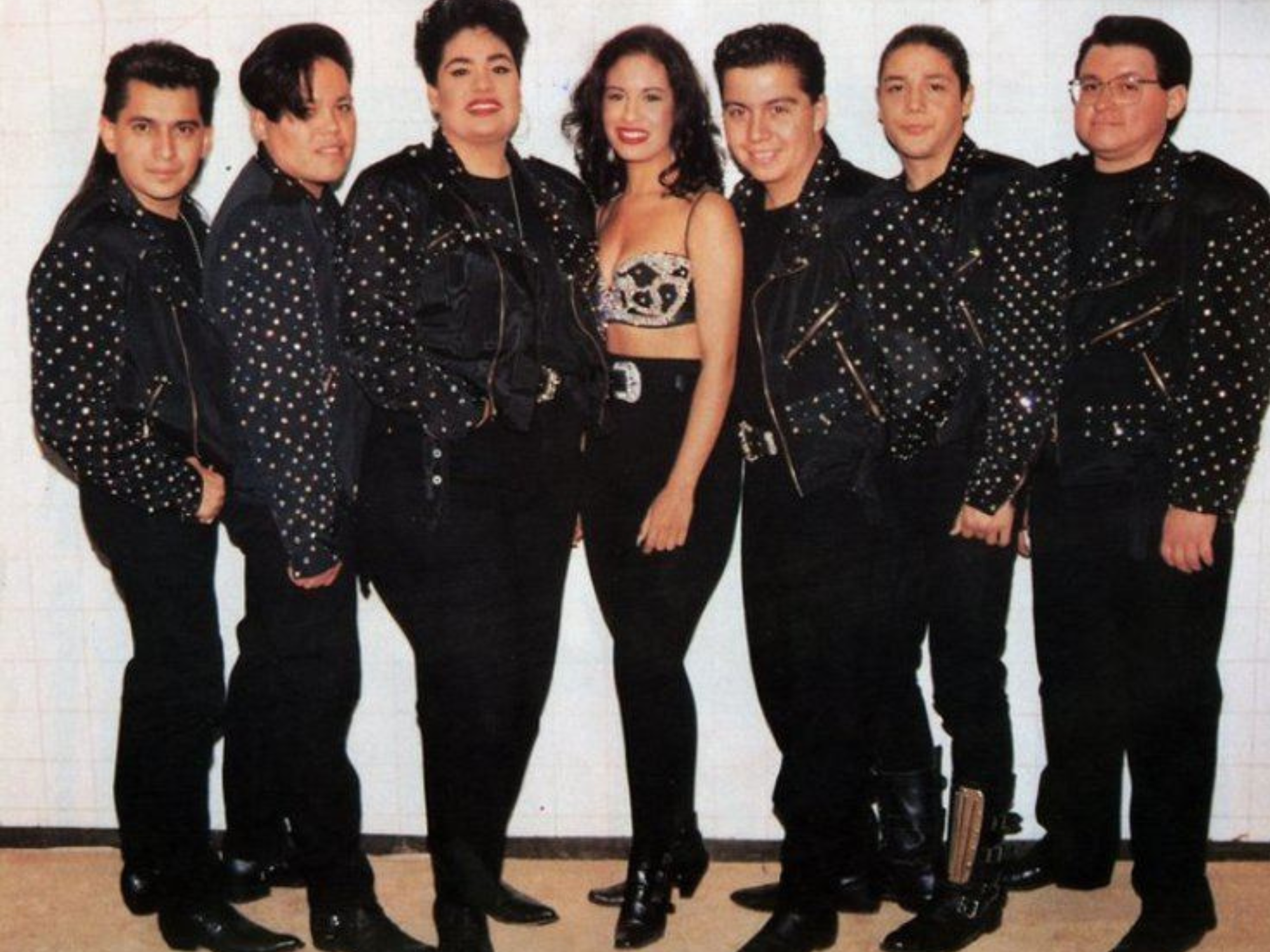
Thirty years of that. Thirty years of deciding what gets used, by whom, on what terms. It is not nostalgia, it is stewardship, and it is work.
Here is the part that goes past Selena.
When we talk about representation, we usually mean visibility: who gets cast, who gets the cover, who shows up on the Hollywood Walk of Fame. Visibility is the beginning of the conversation. Ownership is the rest of it, and we spend much less time on it.
A likeness is property. So are a name, a signature and a style so distinctive that people recognize it without seeing the name attached. As BoldLatina explored in “How AI-Generated Images Are Threatening Latinas’ Rights,” artificial intelligence has made protecting those assets even more urgent, allowing a woman’s face and body to be manipulated, reproduced and circulated without her knowledge or consent. For a Latina building a brand, these may be the only assets a competitor cannot simply purchase or replace. The photographer, fabric supplier and manufacturer can all be changed. Her identity cannot.And the enforcement system built around that property assumes you have a legal department.
Rights do not defend themselves. Someone has to find the listing, document it, send the letter, track whether it came down, and start over when it reappears under a different seller name the following week. That is not a lawsuit. That is a job, and it never ends. Q Productions can staff it. The woman screen-printing her own designs in a garage in San Antonio cannot.
This is why the Shein motion matters to Latinas who will never have an estate.
If a court decides a marketplace carries no direct responsibility for third-party listings, the entire cost of enforcement lands on the rights holder. Every takedown, every letter, every hour. The platform keeps its cut of the sale and hands you a reporting form.
For the Quintanilla family, that is expensive and exhausting. For an independent designer, it is the end of the road. She will find the knockoff, she will feel sick about it, and then she will do the math on a lawyer and go back to work.
The uncomfortable truth is that Selena's estate is the strongest possible plaintiff. Famous subject, clear documentation, real resources, thirty years of established practice, a sister who has made this her life's work. If this is a hard case for them, consider what it looks like for everyone standing behind them in line.
That is the real stake. Not whether one company sold one t-shirt, but whether the protection Latina creators are told they have is something they can actually use.
The above is an opinion piece by BoldLatina Founder/CEO - Michelle Olvera
This year's Latino Conservation Week just wrapped, but the movement and the Virtual Race, isn't over. Here's how your familia can still join in.

Europe wanted to sell her as spectacle but Afro-Latina actress and dancer Chelo Alonso who became a star in Europe, took the career, built a life, and left when she was ready.

Hispanic Heritage Month started as a week in 1968. Here's the law, and the president, that made it a month twenty years later.

Born on September 13, 1922, Yma Sumac became a global music icon with a voice spanning approximately four to five octaves. In our '100 BoldLatinas' series we honor the Peruvian singer who brought Andean influences to international stages and broke barriers for Latinas.
Get weekly inspiration for living well delivered straight to your inbox.