

Who Actually Created Hispanic Heritage Month? The Law, Explained
Hispanic Heritage Month started as a week in 1968. Here's the law, and the president, that made it a month twenty years later.

Europe wanted to sell her as spectacle but Afro-Latina actress and dancer Chelo Alonso who became a star in Europe, took the career, built a life, and left when she was ready.

We are starting a new series. 100 BoldLatinas is our archive of the Latina women our institutions skip or plainly....forget.
The BoldLatina Spotlight Series has always been about Latinas we can call and Q/A interview. This one is different. These women are historical, many of them gone, and the work is recovery rather than conversation. Where a Q&A would sit, we use their own documented words. Where we do not know something, we say so.
This Latina is one of the most photographed faces in Europe and is barely remembered here in the United States and/or Cuba and Mexico. We are talking about Chela Alonso.
Who was Chelo Alonso? Chelo Alonso (born Isabel Apolonia García Hernández, April 10, 1933, in Camagüey, Cuba) was an Afro-Cuban dancer and actress who became a leading star of Italian cinema in the late 1950s. She retired from film at 29 and lived in Tuscany until her death on February 20, 2019, at 85.
She was born Isabel Apolonia García Hernández on April 10, 1933, in Central Lugareño, a settlement built around a sugar mill in Camagüey province, to a Cuban father and a Mexican mother.
She trained as a dancer and was performing at Cuba's National Theatre in Havana by her late teens, at a moment when Havana was one of the great entertainment capitals of the hemisphere. For an Afro-Cuban dancer, that stage was both an enormous opportunity and a ceiling. She was working at the highest level available to her, in a system that had decided in advance how far that level went.
In 1957 she left for Paris.
Las Vegas has Caesars Palace where showgirls rule the stage. Paris, had the Folies Bergère where Chelo Alonso became a headliner. European promoters marketed her as "the new Josephine Baker" and gave her a nickname that followed her for the rest of her career: the Cuban H-Bomb.
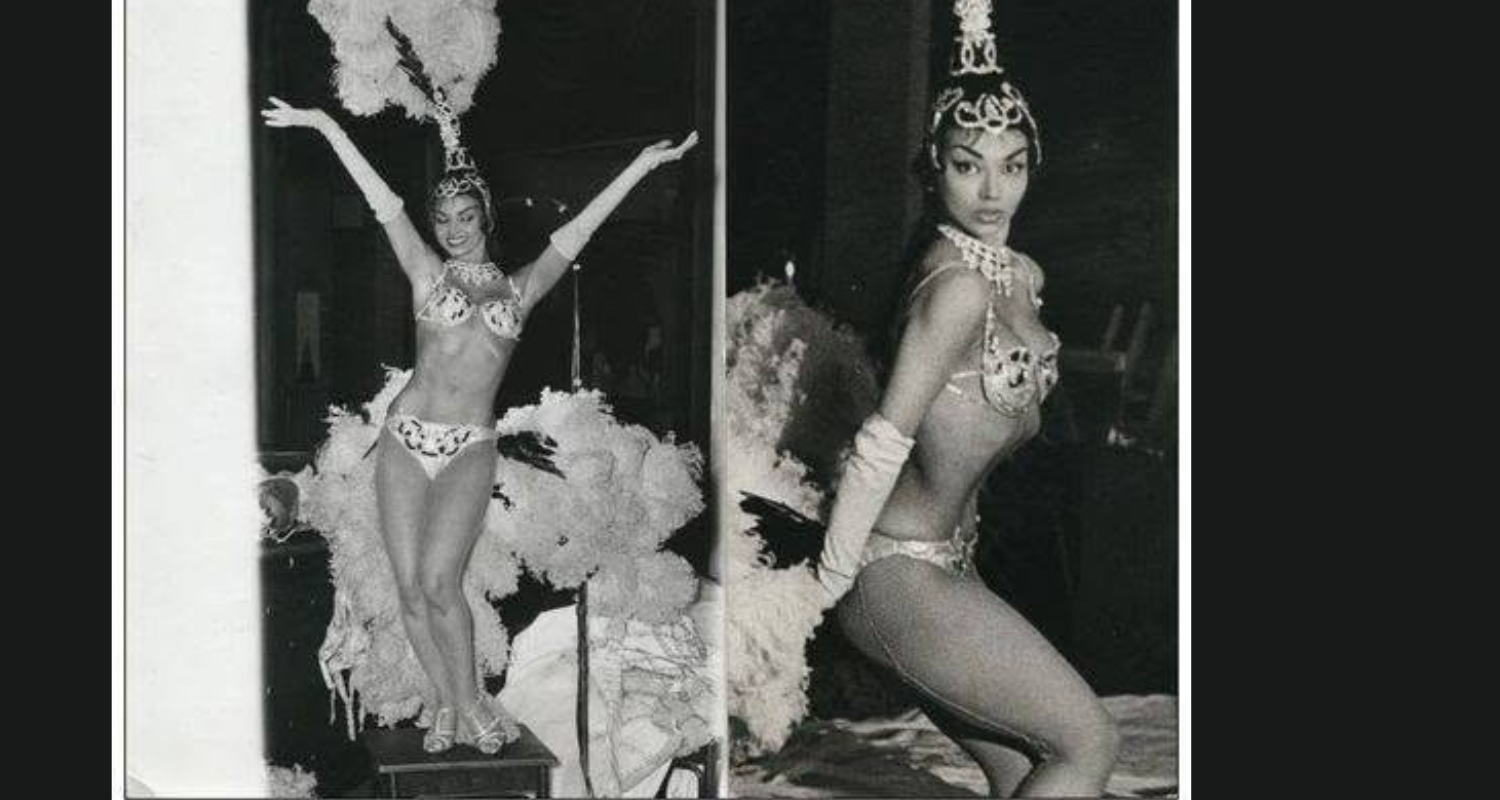
That nickname is worth pausing on, because it describes the way she was marketed. Europe was prepared to pay a great deal for her Blackness and her Cubanness as spectacle. She was the reason audiences bought tickets,
Chela Alonso went with it.
Italy's film scene was booming, and Alonso arrived at exactly the right moment.
Nel segno di Roma (Sheba and the Gladiator, 1959) was her breakthrough. Her dance sequence was so commanding that she pulled focus from the film's credited leads. Goliath and the Barbarians, released the same year, earned her a Female Discovery award from the Italian industry. Morgan the Pirate followed in 1960.
She played queens, warriors and antagonists, powerful women consistently, even when the scripts gave them little to think about. Within the space she was given, she was the most magnetic person on screen, and audiences across Europe knew her name.
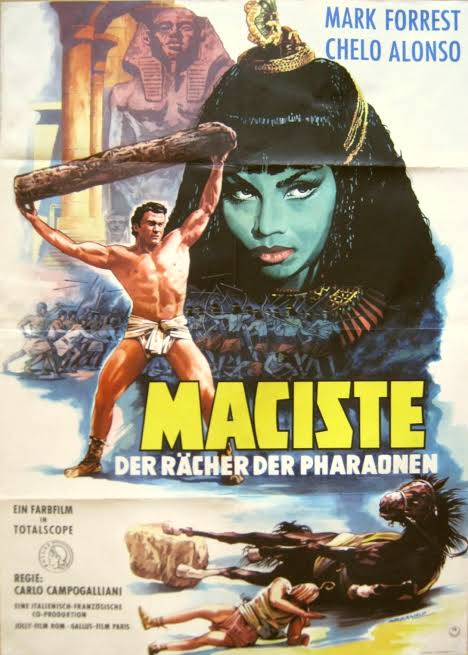
On the set of Morgan the Pirate she met Aldo Pomilia, a production manager. They married and had a son, Aldino. After Quattro notti con Alba in 1962, she stopped acting. She made one more brief, uncredited appearance in The Good, the Bad and the Ugly which starred a young Clint Eastwood in 1966, and that was the end of her film career.
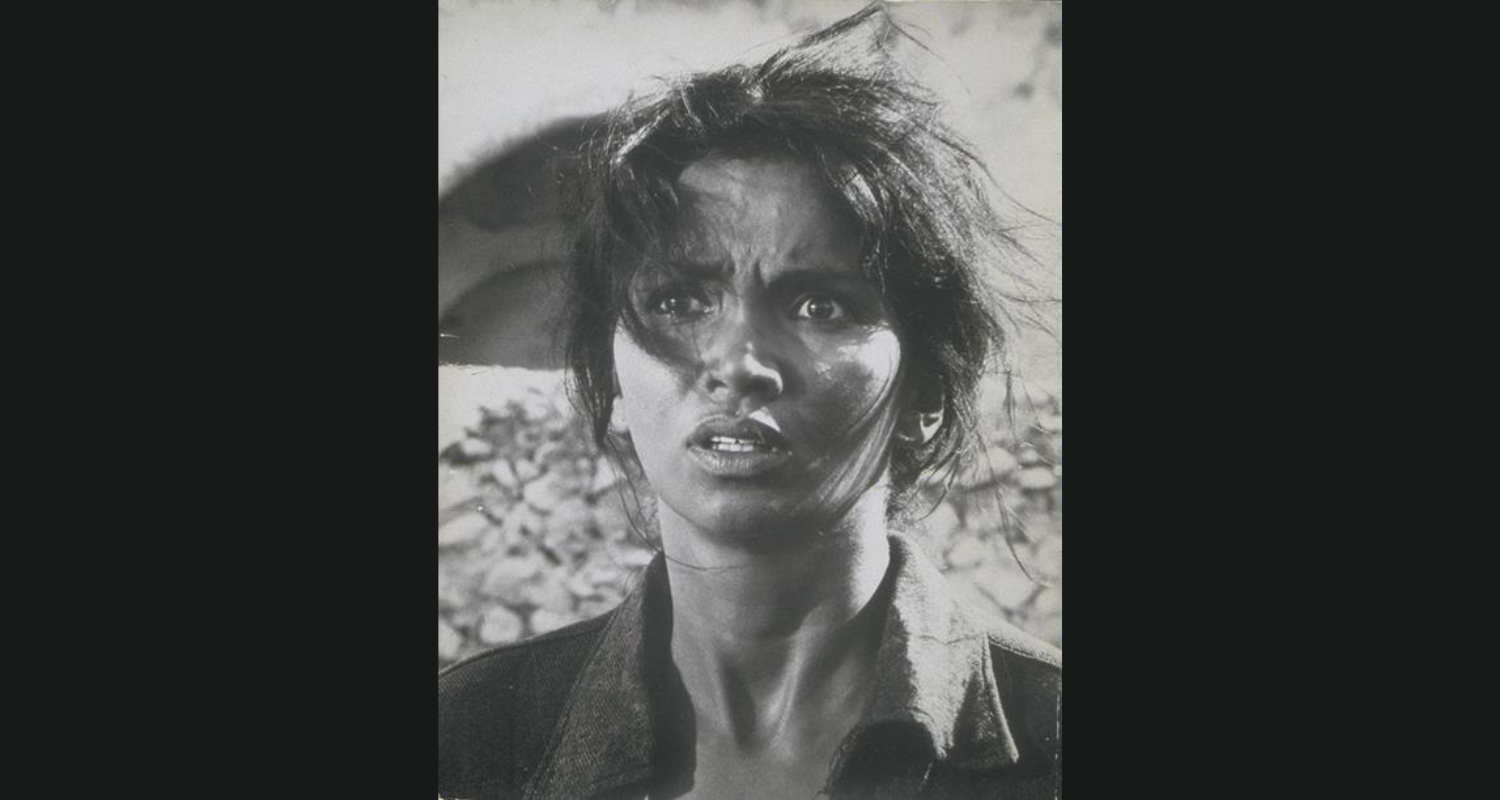
She was 29, at the height of her marketability, in an industry that would have kept hiring her. She did not give interviews explaining her decision to leave the world of entertainment. What the record shows is that she chose the exit herself, at a moment when she still had every option at a very young age.
After her husband Aldo Pomilia died in 1986, Alonso settled in Siena, Italy. She ran a four-star hotel and bred cats with her son, and she lived there for more than three decades, longer than her entire time in film. She died on February 20, 2019, at 85.
Because the arrangement Chelo Alonso was handed is one a lot of us recognize: an industry that will pay generously for the parts of you it finds marketable, and will not extend that interest to the rest of you.
She did not fix that system. She used it, got what she wanted from it, and left on a schedule she set. That is not a small thing, and it is the reason her name belongs at the front of this archive.
100 BoldLatinas is our record of the Latinas history under-taught. Read the series at BoldLatina.com.
What was Chelo Alonso's real name?
Isabel Apolonia García Hernández, born April 10, 1933, in Central Lugareño, Camagüey, Cuba, to a Cuban father and a Mexican mother.
What films was Chelo Alonso in?
Nel segno di Roma (1959), Goliath and the Barbarians (1959), Morgan the Pirate (1960), and an uncredited appearance in The Good, the Bad and the Ugly (1966).
When did Chelo Alonso die?
February 20, 2019, in Italy, at age 85.
Hispanic Heritage Month started as a week in 1968. Here's the law, and the president, that made it a month twenty years later.

Born on September 13, 1922, Yma Sumac became a global music icon with a voice spanning approximately four to five octaves. In our '100 BoldLatinas' series we honor the Peruvian singer who brought Andean influences to international stages and broke barriers for Latinas.

Five films, interviews and resources that restore Latino and immigrant experiences to the story of September 11.

The feminist movement's most famous face spent fifty years working alongside Latina organizers, most notable Dolores Huerta. Dolores said the learning went the other direction.
Get weekly inspiration for living well delivered straight to your inbox.