

Latino Democrats Make History in the 2026 Midterms
Texas has its first Latina governor, California its first elected Latino governor, and a Tejano singer flipped TX-15.

Meet the Latina moms of EcoMadres, turning school-pickup worry into clean air wins, from data center fights to utility bills.

Liz Huarto has a line she uses on city councils, utility commissions and anyone else who would rather not hear from her: you can't say no to moms and/or Latina environments!
She means it as strategy, not sentiment. Huarto is a Connecticut mother of four, ages 10 to 17, and the director of EcoMadres, a network of Latina moms across the U.S. who teach Latino families how pollution, heat and rising energy bills land on their kitchen tables, and then show them where to go to push back. In a year of federal rollbacks and data center fights, that work has become very practical.
"We just show up in force, and we're like, 'hey, we demand to be heard because you can't say no to moms. We're here to protect our children. We have stories to tell, and we need you to hear us,'" she said.
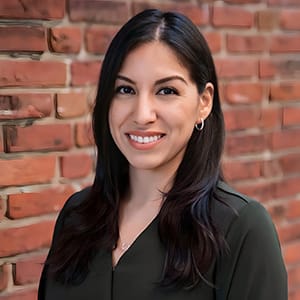
For Huarto, who is Peruvian American, fighting for cleaner air is not separate from parenting. It is part of the job, and it is the argument she uses to bring other parents and caregivers in.
"Latinos by nature are environmentalists without calling ourselves that," she said. "It's why we care for the environment, why we care about protecting our children, and future generations."
EcoMadres began around 2018 as a project of Moms Clean Air Force, the national grassroots group focused on protecting children from air pollution and climate harm. It was created to reach Latino communities across the U.S. that live with environmental injustice and are rarely invited into the conversation about it.
The name plays on comadre, the Spanish word for a close friend or confidant, often the woman who helps raise your kids. The idea is neighbors and families learning from each other.
Huarto points to a gap that researchers have documented for years. A 2022 American Lung Association analysis warned that parks and playgrounds in communities of color often sit near truck routes, rail lines and heavy equipment, and cited Harvard research finding fine-particle pollution 14% higher in predominantly Latino zip codes than in predominantly white ones. In California, a 2025 UCLA Latino Policy and Politics Institute analysis found that residents of Latino neighborhoods had double the rate of emergency room visits for asthma compared with residents of non-Latino white neighborhoods.
"[Latinos] have been pushed into these neighborhoods that may be mixed zoning, meaning there can be a refinery right next to a home, right next to a school polluting the air," Huarto explained.
EcoMadres organizers work directly with frontline communities. The group's social media promotes info sessions in English and Spanish on climate and environmental health, including the health effects of extreme heat.
Organizers also run in-person and online actions, from petitions to sessions on how to identify and contact your elected officials. According to Huarto, offering a range of ways to participate matters, because Latinos who do not feel safe protesting still deserve a way to learn how environmental injustice affects their families and to act on it.
"It does not need to be this way, and we need more folks to be aware that this is happening many times in their backyard without them even knowing," Huarto said.
This year has tested that model. The federal government has moved to weaken clean air protections and cut funding for nonprofits that supported neighborhoods facing environmental racism. Meanwhile, AI data centers are being proposed across the country, often with little public input, and residents have started showing up at local meetings to ask why.
In Wisconsin, Jayne Black, the state field organizer for Moms Clean Air Force, worked with EcoMadres organizers to build social media campaigns and online groups that explained the health and energy impacts of data centers to local parents. Those parents went to the hearings.
"They showed up to the hearings. They provided a lot of pushback through messaging and posting on social media," Huarto recalled.
In January 2026, Cloverleaf Infrastructure dropped its plan for an AI data center in the Village of Greenleaf, in Brown County, after a public meeting where many residents voiced opposition, according to local reporting by WBAY.
A lot. Latino households are disproportionately energy burdened, meaning they spend a larger share of income on utilities and are more likely to struggle to pay them. So EcoMadres and Moms Clean Air Force organizers now teach families how rate hikes work, which utility commissions approve them, and where to submit public comments so they count.
"We're providing those tools and that empowerment to show up," Huarto said.
Most environmental decisions that shape a neighborhood are not made in Washington. They are made at a zoning board on a Tuesday night, or a utility commission most people have never heard of. EcoMadres' bet is that a room full of moms, Latina environmentalists and activists who know the process is harder to ignore than any press release.
Does your city have a data center, refinery or rate hike on the agenda? Find out when the next public hearing is, and bring a comadre.
Texas has its first Latina governor, California its first elected Latino governor, and a Tejano singer flipped TX-15.

A UCLA and Berkeley poll found Latinas and Latino men in California 17 points apart on what they want from a governor.

San Francisco may rename Cesar Chavez Street "Las Campesinas" to honor the women of the farmworker movement.

Pets, sudden deaths, the forgotten, the angelitos. What each day of Día de Muertos honors.
Get weekly inspiration for living well delivered straight to your inbox.