

'You Can't Say No to Moms': How EcoMadres Is Teaching Latino Families to Fight for Clean Air
Meet the Latina moms of EcoMadres, turning school-pickup worry into clean air wins, from data center fights to utility bills.

Pets, sudden deaths, the forgotten, the angelitos. What each day of Día de Muertos honors.

Día de Muertos is not one day. In many Mexican and Latino households the ofrenda begins filling up on October 27 and keeps growing until November 2, and each night along the way belongs to someone different. Pets first. Then the people who died violently. Then the ones nobody claimed. Then the children. Then everyone else.
Which brings up the question that goes around the family group chat every year around now: wait, which night is for who?
Here is what each one carries, and why you will find three different answers if you ask three different people.
November 1 and 2 are fixed and usually the days of observance. The five days in front of them are ancestral practice and can shift by region, by familia, and by how religious the house is.
It is not Halloween. It is not sad. The whole architecture of it assumes the dead are coming over, and you would not greet a guest with an empty table. Though the holiday has touched commercial notoriety for example Dia De Muertos Barbie dolls or other themed consumer products, it's still very much ancestral and folk practice.
Día de Muertos is a Mexican and Latin American tradition of welcoming the dead back for a visit. Families build ofrendas with cempasúchil, candles, water, pan de muerto and the food the person actually liked, and many go to the cemetery to clean the grave and sit with it a while.
UNESCO inscribed it on the Representative List of the Intangible Cultural Heritage of Humanity in 2008, under the name "Indigenous festivity dedicated to the dead." The listing describes a "fusion of pre-Hispanic religious rites and Catholic feasts" that brings together two worlds, one shaped by Indigenous belief and the other by what Europeans brought in the sixteenth century. It also ties the timing to the end of the maize cycle, which is the part most people skip: this is a harvest holiday as much as a mourning one.
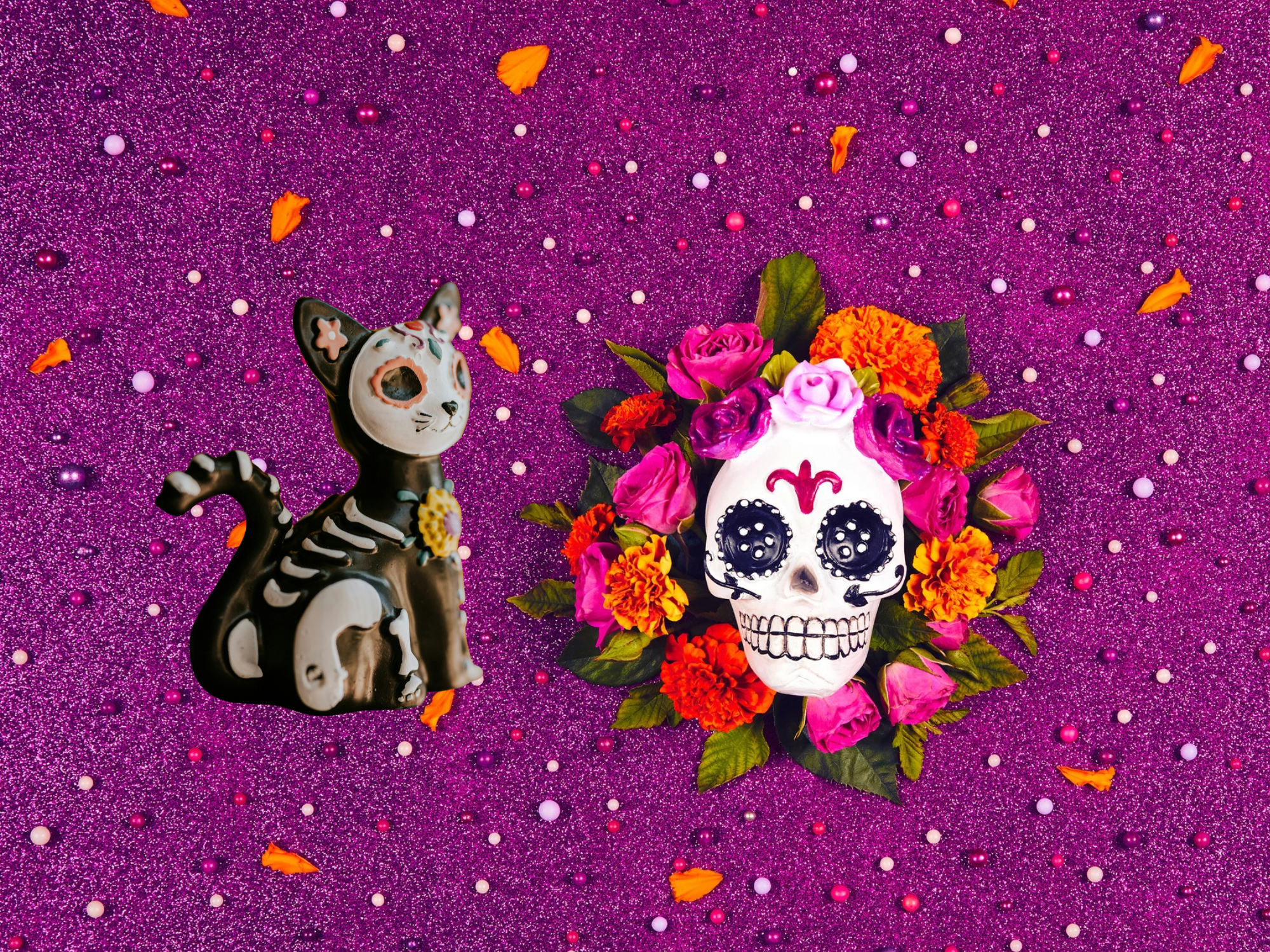
The first candle goes to pets. Dogs, cats, horses and the parrot your abuelita had.
This is the newest day on the calendar and the one most clearly made by people rather than inherited from them.
Whether modern pet altars descend from that or simply grew out of grief that had nowhere else to go, the result is the same. People wanted a night for the animal that slept at the foot of the bed, so they made one.
This day is for people who died in accidents, in violence, suddenly. Deaths with no goodbye attached. Sudden.
Across Mexican outlets this is the most consistently reported day of the October stretch, and it is also the heaviest. The logic behind it is practical and tender at once: a soul that left in shock is thought to need its own night, separate from the calm ones, often with the ofrenda set outside the house or near the door rather than inside.
It is the one that holds car crashes, the border, the cartel, the job site with no safety rail. Today, relevant with immigration enforcement or ICE raids and detainment which have left many fighting for their lives and unfortunately dead.
La Crónica de Hoy describes October 29 as a day for forgotten and unsheltered souls, or for people who drowned, depending on the region. El Tiempo assigns it to the ánimas del purgatorio, with drowning victims remembered in some communities. Vanguardia gives it to the drowned outright.
Where water is part of the answer, the ofrenda usually is too. A glass of water sits on nearly every altar anyway, for the thirst of a long trip. On this night it means something more specific.
October 30 belongs to the almas solas, the lonely souls. People who died with no family to remember them, or whose families are gone now too.
Some versions put unbaptized children here instead, or souls in purgatory.
The theme underneath it does not vary, though, and it is the most quietly radical idea in the whole week: somebody has to remember the people nobody is remembering. You light a candle for a stranger. That is the entire instruction.
The last October night is usually given to babies who died unbaptized or were never born.
In Catholic terms these were souls with no assigned place, which is exactly why the folk calendar made them one.
Día de Todos los Santos, and in Mexican practice it belongs to children.
They are called angelitos, or muertos chiquitos. The ofrenda changes for them: sweets instead of mole, toys, smaller pan de muerto, white flowers alongside the marigolds, sometimes no alcohol or chile at all. Some families use white candles rather than the usual ones.
This is the cemetery day. Families clean the headstone, lay down cempasúchil, bring food and sit, sometimes all night, sometimes with music. The ofrenda at home is at its fullest. If the week has a center of gravity, it is here.
Which night does your family start, and who gets the first candle this year? Tell us.
Meet the Latina moms of EcoMadres, turning school-pickup worry into clean air wins, from data center fights to utility bills.

Texas has its first Latina governor, California its first elected Latino governor, and a Tejano singer flipped TX-15.

A UCLA and Berkeley poll found Latinas and Latino men in California 17 points apart on what they want from a governor.

San Francisco may rename Cesar Chavez Street "Las Campesinas" to honor the women of the farmworker movement.
Get weekly inspiration for living well delivered straight to your inbox.