
5 Latin American Films to Watch in 2026
Latin American films have been making waves in the festival scene for years. These five films highlight the power, complexity, and global rise of Latinx storytelling in 2026.

Our nation’s teachers are our nation’s backbone, after all they educate, guide and mentor the next generation students to come. According the latest Census projections, that the US will become ‘minority white’ in 2045 which leaves us to wonder in the browning of America, who will be teaching America? Black, Latinx, people of color. With American schools becoming more diverse than ever, why are most teachers white non-Latino and what can be done to make the profession of teaching more compelling to those who represent our communities more? Teachers of color are in demand. There is one group however, leading more than others in entering the teacher profession: LATINAS. The Latina teacher is going to shape the way American children are educated.
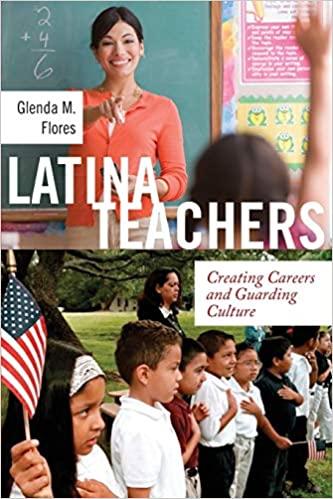
We speak with Glenda M. Flores, a Latina teacher and author of Latina Teachers: Creating Careers and Guarding Culture where she writes about the complexities of Latina teachers and navigating the profession.
Glenda M. Flores, our BoldLatina Spotlight a Latina teacher or educator was born and raised in the predominantly Mexican and Central American immigrant city of Santa Ana in California. Glenda’s parents are both Latino immigrants with less than a middle school education and she grew up in a mixed status family until her parents were helped by IRCA in 1986. A Santa Ana High School graduate, Glenda holds a doctoral degree in Sociology with a certificate in Gender Studies & Sexuality Studies at USC. You can call her Profesora Flores as she is Associate Professor of Chicano/Latino Studies at UC Irvine where she does research on Latinxs in white collar jobs.
Glenda: Becoming a “professora” was not a dream that I had when I was young because I wasn’t even aware that it was a possibility for me. However, it was ethnic studies, in particular Chicano/Latino Studies where I met Latina/o professors like historian Vicki Ruiz and political scientist Lisa Garcia-Bedolla that exposed me to this pathway.
Glenda: The hardest part of my journey was definitely in graduate school because there was so much color-blind racism from some faculty. As a first generation college student I thought folks with college degrees understood systemic racism better. That was not the case. Dealing with faculty that would talk about Santa Ana, the city I love, or me, in deficit ways was really tough. It was not until I found a supportive faculty mentor, Pierrette Hondagneu-Sotelo, that things turned around for me. She wrote a book about Mexican and Central American immigrant women who work as domestics in LA and I definitely felt that she understood where I was coming from.
Glenda: My best tip is to make sure you get credit for your own work. Womxn are so innovative and have great ideas. In whatever you are passionate be the kind of womxn who makes others want to up their game.
Glenda: Latina teachers or educators are the fastest non white racial/ethnic group entering the teaching profession and I definitely think this is going to grow more across the nation in the coming years. They are younger, first generation college students and many are bilingual and bicultural, a definite asset in their jobs to connect with a more diverse student population.
Glenda: My book asks how much change can people make given the massive structural constraints they face everyday. I examine how Latina teachers creatively draw from Latinx cultures as a way to create a sort of quiet revolution in schools. It also examines how women are diverted away from STEM fields. My ext book project is on Latina/o/x physicians.
Glenda: More Latinas are obtaining their 4 year college degrees compared to in the past. Yet, there are still gendered constraints that they have to navigate in their families and especially their jobs. Reform is necessary in the wage gap for Latinas and we also need to be more attentive to the challenges boys of color, especially Latino and Black, are facing in schooling.
Glenda: One of the biggest challenges this year was financial strain, health care, and how the pandemic ravaged communities of color, especially the Latina/o/x community. I lost two family members to Covid, one of which was the matriarch of our family, and all of this did not have to happen. My next project is definitely taking a social determinants of health angle.
Glenda: I wish women and women of color didn’t have to experience sexual harassment in the workplace. For women of color it is usually racialized and that can be so traumatizing. I wish women of color weren’t undermined for being experts in their fields. As a side note I bought this Orly nail polish called Kick Glass that I wear sometimes to remind me that I’m here to smash the patriarchy, break glass ceilings, and open doors for others.
Glenda: A Bold Latina is someone that is unapologetically themselves and leads in a way that is true to who they are as a person. It is someone who thinks of others (not just themselves) when making moves. My motto is that if I shine others are coming with me.
Glenda: Yes! Here I’m going to take a quote from Ruth Bader Ginsberg (RBG). “Women belong in all places where decisions are being made.” If you aren’t in the room then you can’t advocate for yourself and others.
Latin American films have been making waves in the festival scene for years. These five films highlight the power, complexity, and global rise of Latinx storytelling in 2026.
Voting rights for Black and Latino communities are being gutted by the Supreme Court. Changes include access to the ballot.
Nemonte Nenquimo’s We Will Be Jaguars tells a powerful story of Indigenous resistance, identity, and environmental justice making it essential reading for Latinas today.
Global Latina-owned cannabis brands are redefining the industry through culture, identity, and innovation across Latin America and the United States.
Get weekly inspiration for living well delivered straight to your inbox.