

Latino Conservation Week 2026 Just Wrapped — Here's How Latino Families Can Still Get Outside
This year's Latino Conservation Week just wrapped, but the movement and the Virtual Race, isn't over. Here's how your familia can still join in.

More than 20 years after her death, Celia Cruz’s speaking voice has been recreated with AI. Projects like these raise questions about consent, cultural authenticity and whether AI will support or eventually replace human Latino creators.

More than 20 years after her passing, one of the most influential and legends of our time Celia Cruz has sparked controversy by becoming what her estate has described as the first Latina artist whose voice has been officially recreated through artificial intelligence by ElevenLabs.
The AI audio company’s Iconic Marketplace also includes licensed versions of the voices of Dr. Maya Angelou, Enrique Rocha and other cultural figures. Companies and creators can request permission to use these voices in entertainment, educational and commercial projects but the rights holder must approve each proposed use.
Even with legal authorization from an artist’s estate or representatives, some fans have expressed serious reservations about how artists’ legacies can be exploited, especially when their images or voices are used to fill corporations’ pockets. One controversial example was BetWarrior’s advertisement featuring an AI-generated version of soccer legend Diego Armando Maradona. Although his family reportedly authorized the campaign, many fans still questioned whether Maradona himself would have agreed to promote online gambling. So could the same premise can be applied for Celia Cruz?
Are voice-generation companies helping preserve our idols or compromising the real, cultural AND political meaning of their voices?
Is AI may be both a respectful tribute and a threat to Latino narratives.
Companies such as ElevenLabs have positioned themselves at the forefront of this trend by licensing AI-generated voices of historical figures and celebrities. But making these voices available does not mean they are left unsupervised.
In Celia Cruz’s case, her longtime manager and estate executor, Omer Pardillo Cid, emphasized that the project will remain tightly controlled.
“It’s not as though everyone is going to have access to Celia’s voice and be able to do whatever they like with it. This is a very limited process,” Pardillo said in comments to EFE published by Diario Libre.
The AI-generated voice is intended for carefully approved cultural and educational projects, including possibilities such as museum exhibits, children’s books and historical narration. According to the estate, it will not be used to create new Celia Cruz songs or turn her into a digital performer.
ElevenLabs also requires potential users to submit a project proposal. Each request must be reviewed by the appropriate rights holder, who can approve or reject it based on the content, purpose and intended audience.
The voice may be artificial, but the control over it remains human.
Celia Cruz’s AI voice has sometimes been compared with the technology used for Selena Quintanilla’s posthumous album Moonchild Mixes. However, these projects are not the same.
Released in August 2022, Moonchild Mixes included 13 songs based on authentic vocal recordings Selena made when she was between 13 and 16 years old. Ten of the performances had not previously been released.
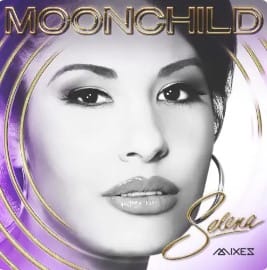
Selena’s brother and producer, A.B. Quintanilla, used digital software to clean, re-time and lower the pitch of some of her vocals, making her teenage voice sound more mature. As Pitchfork reported, the album used digitally altered recordings not a newly generated AI voice made to perform words or songs Selena never recorded.
Still, the changes came across as disturbing to some audiences. Selena’s family has long faced accusations of exploiting the singer’s fame for profit, allegations her father and former manager, Abraham Quintanilla, has repeatedly brushed off. The family has defended projects such as Moonchild Mixes as efforts to honor Selena’s memory and introduce her music to new generations.
The distinction is important: voice cloning, digital vocal alteration and audio restoration are different technologies, even if all three are frequently placed under the larger and sometimes misleading label of 'AI-generated'.
Voice rights lack a consistent legal framework around the world. Laws have struggled to keep pace with technological advances, leaving copyright, publicity rights and digital-replica protections complicated and uneven.
Copyright can protect a particular sound recording, but control over a person’s vocal identity may also depend on contracts, state publicity laws and the jurisdiction where the artist or company is based.
In 2024, the U.S. Copyright Office concluded that existing protections did not adequately address unauthorized digital replicas and recommended the creation of a federal law.
Some states have adopted their own protections. Tennessee’s ELVIS Act protects artists against certain unauthorized AI imitations of their voices, while California has enacted laws addressing digital replicas of living and deceased performers. Still, protections vary significantly from one place to another.
A well-known example of this legal and ethical uncertainty is the Scarlett Johansson voice controversy. In May 2024, Johansson said OpenAI’s “Sky” voice sounded eerily similar to hers after she had declined an offer to become a voice for the system. OpenAI denied copying or imitating Johansson, saying Sky belonged to another professional actor who had been cast before the company approached her. The company paused the voice following her concerns.
The disagreement showed how difficult it can be to determine where inspiration ends and unauthorized imitation begins.
While estates may have the legal authority to approve commercial and cultural projects, they cannot know with certainty what the artists themselves would have approved.
Pardillo has acknowledged these concerns regarding Cruz.
“I have to be very careful because I don’t want Celia’s voice to be used for things she wouldn’t have wanted either,” he told EFE. “Whenever I’m about to start a project, I think it over three times and ask myself: ‘Would she have liked this, or wouldn’t she have?’”
This level of care provides an important safeguard. Still, it depends on another person’s interpretation of the artist’s wishes.
Legal permission is not always the same as personal consent especially when the person whose identity is being recreated can no longer say no.
AI’s use of artists’ work without clear consent is not news, but it can be especially worrying for Latin American creators when it comes to rightful ownership and use of intellectual property.
In 2024, Argentine illustrator María Luque learned that Meta had notified many European users about the use of their public content for AI training and provided a process for objecting. According to reporting by Rest of World, the same option was not available to users in much of Latin America.
Latin American countries do have data-protection and intellectual-property laws. However, differences in laws and corporate policies can leave creators with fewer practical options to object, negotiate or control how their work is used.
Regarding voice generation, AI platforms earn revenue through subscriptions, licensing agreements and enterprise partnerships. Brands may also see synthetic voices as a faster and less expensive alternative to traditional voice actors.
Labor organizations have warned that AI-generated voices not only celebrity versions could replace commercial performers in advertising, dubbing, video games and narration.
SAG-AFTRA has negotiated agreements requiring protections such as informed consent, fair compensation and limits on future uses of performers’ digital voice replicas. And the State of California protects the digital likeness of performers.
Artificial intelligence is neither inherently respectful nor inherently exploitative. Like any technology, its impact depends on the people and companies behind it.
Used responsibly, AI can help preserve Latinx cultural history, introduce legendary performers to new audiences and make priceless archives more accessible.
But responsible use requires more than permission from an estate. It also requires transparency, cultural sensitivity, clear limits, fair compensation and respect for the creative workers who could be displaced.
The goal should never be to replace Celia Cruz or any other iconic artist or to make them say or sing something they never chose to express.
It should be to help future generations listen to, understand and appreciate the artists who shaped Latin music without rewriting who they were.
The question is not only whether AI can recreate the Queen of Salsa’s voice. It is whether anyone should be allowed to decide what Celia Cruz says next.
Resumen en español
La recreación de la voz hablada de Celia Cruz mediante inteligencia artificial ha reavivado el debate sobre el consentimiento, la propiedad y el uso comercial de artistas fallecidos.
El patrimonio de Cruz y ElevenLabs aseguran que su voz digital estará estrictamente controlada y será considerada únicamente para proyectos culturales y educativos. No se pretende crear nuevas canciones ni permitir que cualquier persona acceda libremente a su voz.
Este proyecto también es diferente de Moonchild Mixes, el álbum póstumo de Selena Quintanilla. En ese caso, se modificaron digitalmente grabaciones auténticas de la cantante; no se generó una nueva voz mediante inteligencia artificial.
Aunque la IA puede ayudar a restaurar grabaciones, traducir contenidos y preservar la historia musical, su uso responsable requiere autorización, transparencia, compensación y límites claros. La pregunta sigue siendo quién debe decidir lo que una artista puede decir después de su muerte.
This year's Latino Conservation Week just wrapped, but the movement and the Virtual Race, isn't over. Here's how your familia can still join in.

Europe wanted to sell her as spectacle but Afro-Latina actress and dancer Chelo Alonso who became a star in Europe, took the career, built a life, and left when she was ready.

Hispanic Heritage Month started as a week in 1968. Here's the law, and the president, that made it a month twenty years later.

Born on September 13, 1922, Yma Sumac became a global music icon with a voice spanning approximately four to five octaves. In our '100 BoldLatinas' series we honor the Peruvian singer who brought Andean influences to international stages and broke barriers for Latinas.
Get weekly inspiration for living well delivered straight to your inbox.