

Grace Hopper Celebration Canceled: Where Latinas in Tech Can Go Now
Grace Hopper is canceled. Here's what Latinas in tech can do, and the communities still worth your time.

Venezuela’s historic earthquakes exposed more than fragile buildings. They revealed decades of corruption, institutional collapse, failing infrastructure, and a nation struggling to recover amid political repression, economic crisis, and international sanctions.

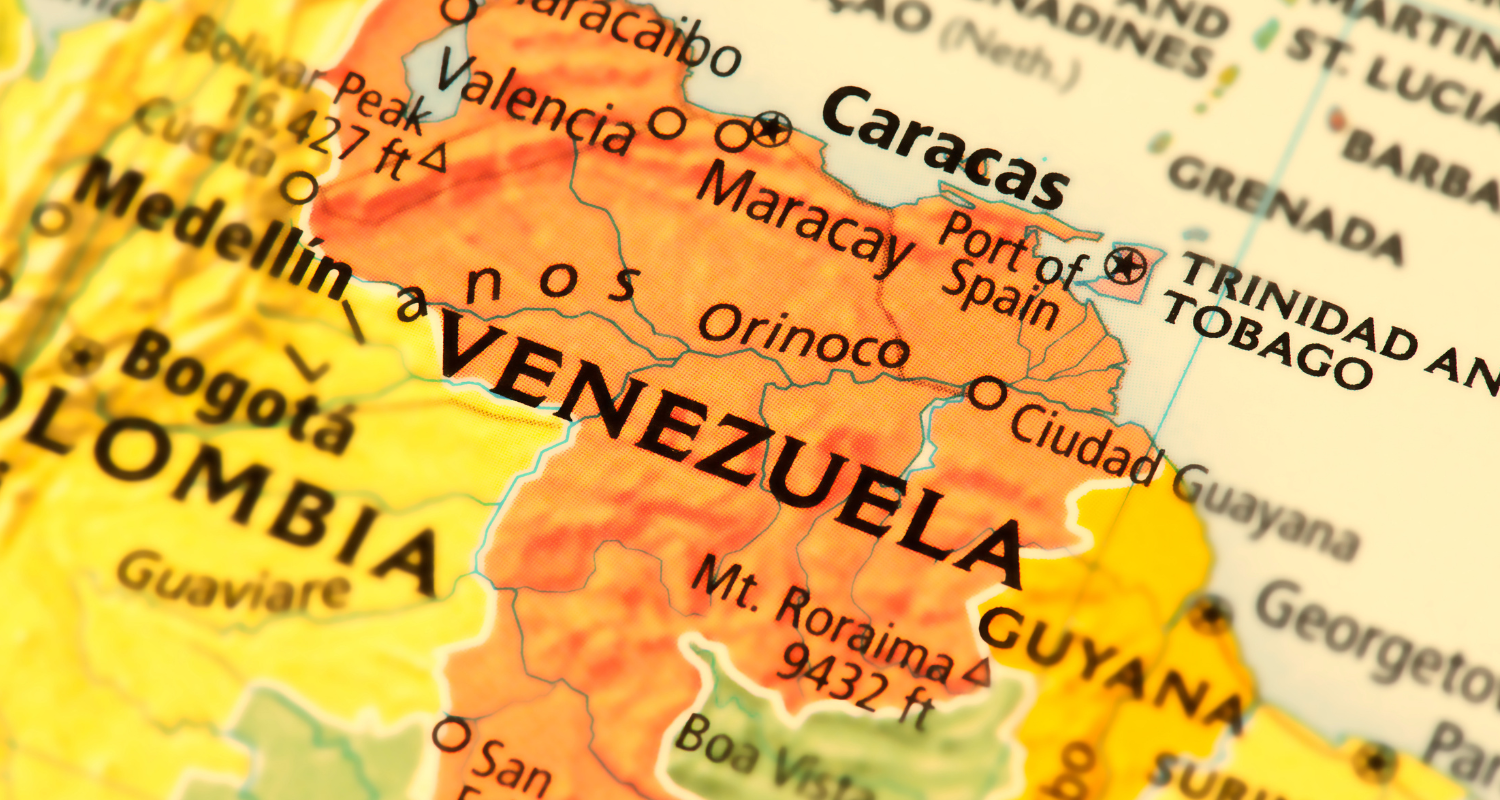
Venezuela is a country of Caribbean coastlines, Andean peaks, ancient tepuis and extraordinary cultural diversity. It is also home to a population that has endured political repression, economic collapse, shortages, blackouts and one of the largest displacement crises in the world.
Then, on June 24, 2026, the ground beneath northern Venezuela violently shifted.
A magnitude 7.2 earthquake was followed only 39 seconds later by a magnitude 7.5 mainshock near Venezuela’s northern coast, west of Caracas. The U.S. Geological Survey described the second quake as part of an earthquake doublet and warned that the sequence could trigger significant landslides across the affected region. The earthquakes were reportedly Venezuela’s strongest in more than a century.
As of July 8, the official death toll had risen above 3,800. Nearly 17,000 people had been injured and approximately 18,000 were left homeless. Those numbers may continue to change as recovery teams reach damaged communities and identify victims.
The disaster cannot be blamed on one president, one political party or one foreign government. Earthquakes are natural events.But the number of people who die when the earth moves is not determined by magnitude alone.
Building standards, emergency planning, hospital capacity, trustworthy institutions, public investment and the speed at which rescue equipment reaches trapped residents can mean the difference between survival and death. In Venezuela, the earthquakes struck a country whose systems had already been hollowed out.
This was not only a natural disaster. It was a devastating test of the Venezuelan state and the state was profoundly unprepared.
Entire buildings collapsed in Caracas, La Guaira and surrounding communities. Residents reportedly searched through concrete with shovels, ropes and their bare hands as they waited for heavy equipment and professional rescue teams.
Engineers have called for audits of state-constructed housing and stronger enforcement of building regulations. Reuters reported that experts pointed to poor code enforcement, unstable soil conditions and delayed access to heavy machinery as factors that worsened the catastrophe.
One of the most painful symbols was the destruction reported at Ciudad Hugo Chávez, a large social-housing development in La Guaira. The project had once been promoted as proof that the Bolivarian government could provide dignified housing for working-class Venezuelans. After the earthquakes, it became a symbol of unanswered questions about materials, inspections, construction oversight and political accountability.
Government housing does not automatically fail because it is public housing. Social programs are not inherently corrupt. But when contracts are opaque, political loyalty replaces professional oversight and officials face few consequences for defective work, public infrastructure becomes dangerous.
Corruption is often discussed as though it were limited to stolen money. In reality, corruption can appear as a hospital without supplies, a water system that stops functioning, an emergency agency without equipment or a building that collapses because inspections were ignored.
During a disaster, corruption becomes concrete.
Venezuela did not arrive at this moment overnight. For much of the second half of the 20th century, the country was considered one of Latin America’s more stable electoral democracies. But its political system also suffered from inequality, patronage, oil dependence and growing distrust of traditional parties.
By the late 1990s, poverty had surpassed 50 percent. Many Venezuelans believed that the political establishment represented business interests and connected elites rather than the public. Hugo Chávez entered that vacuum.
Elected president in 1998, Chávez promised to dismantle the old political order and redistribute the country’s oil wealth. His government expanded social programs and initially gained broad support among Venezuelans who had long felt excluded. But Chávez also concentrated executive power.
A new constitution was approved in 1999, and the judiciary was subsequently reorganized. Many judges remained in provisional positions, making their employment vulnerable to political pressure. Over time, independent institutions weakened as the executive branch expanded its influence over the courts, electoral authorities, the military, the national oil company and public media.
The attempted removal of Chávez in April 2002 became another decisive moment. A short-lived transitional government led by business leader Pedro Carmona dissolved major public institutions and suspended the 1999 Constitution. The unconstitutional actions of Chávez’s opponents helped the president portray his administration as the defender of democracy and gave him political justification to consolidate control.
After returning to power, Chávez deepened his alliance with the military, Cuba and loyal political organizations.
Beginning in 2007, his administration accelerated nationalizations and expropriations across electricity, telecommunications, oil, steel, cement and other industries. State ownership alone does not inevitably produce collapse. But in Venezuela, many enterprises were increasingly managed through political patronage, weak transparency and limited independent oversight.
The government received extraordinary oil revenues during years of historically high prices. It also obtained billions of dollars in oil-backed financing from China.
Some of that wealth financed healthcare, education, food and housing programs that improved conditions for millions of Venezuelans. But the oil boom also concealed structural weaknesses. Venezuela remained heavily dependent on petroleum, accumulated debt, neglected maintenance and failed to build resilient institutions capable of surviving lower oil prices.
When revenues fell, the weaknesses were exposed.
Chávez occasionally criticized officials publicly for cost overruns, failed projects or inconsistent production figures. Yet public reprimands rarely became transparent investigations followed by meaningful judicial consequences. That distinction matters.
Accountability is not a president scolding a minister on television. Accountability requires independent prosecutors, auditors, courts, journalists and public records capable of establishing where money went and who was responsible.
When Nicolás Maduro (who was captured by the United States Department of Justice) now succeeded Chávez after his death in 2013, the political and economic crisis accelerated.
Between 2013 and 2021, Venezuela’s economy contracted by roughly three-quarters. Hyperinflation destroyed wages and savings. Oil production fell. Food and medicine shortages intensified. Electrical blackouts and water disruptions became part of daily life. Hospitals lost supplies, equipment and personnel as medical professionals joined the country’s growing diaspora.
Millions of Venezuelans left their beloved Venezuela.
The deterioration of public infrastructure was therefore not hidden before the earthquake. Venezuelans had been living inside it for years.
A hospital unable to maintain equipment in ordinary times cannot suddenly become a fully functioning trauma center after a major earthquake. A government that cannot reliably deliver water during normal conditions will struggle to provide sanitation across crowded emergency shelters.
The earthquake did not create Venezuela’s institutional crisis. It exposed its most lethal consequences.
Venezuela’s crisis is also a crisis of justice.
The disputed July 28, 2024 presidential election further damaged public confidence in the state. Electoral authorities declared Maduro the winner without releasing the detailed polling-station-level results demanded by the opposition and international observers.
The opposition, led electorally by Edmundo González and politically by María Corina Machado, published copies of voting records that it said demonstrated a decisive opposition victory. Protests soon followed.
The United Nations’ independent fact-finding mission documented a sharp escalation in repression, including arbitrary detention, torture, enforced disappearance and sexual violence. Its reporting found that 25 people died and more than 2,200 were arrested during the post-election crackdown.
When citizens cannot trust election officials, courts, police or public information, that distrust does not disappear during a disaster. It affects whether residents believe evacuation instructions, whether families report missing relatives, whether volunteers cooperate with security forces and whether journalists can document conditions in affected communities.
Reporters covering the earthquake have described restrictions, surveillance and government suspicion even as survivors pleaded for the world to see what was happening. An authoritarian state may be able to control a narrative. It cannot command collapsed infrastructure back into existence.
Any honest assessment of Venezuela must examine both the failures of its governing elite and the consequences of U.S. policy.
The United States did not create Venezuela’s oil dependence, dismantle its judicial independence, mismanage its public utilities or decide how state construction contracts were awarded.
Those responsibilities belong primarily to Venezuelan leaders and institutions. But Washington has played a substantial role in Venezuela’s modern crisis.
Over successive administrations, the United States imposed sanctions on Venezuelan officials, financial activity, state assets and the oil sector. Some sanctions targeted individuals accused of corruption, drug trafficking or human-rights abuses. Broader financial and petroleum restrictions were intended to pressure the government and restrict its access to revenue.
Supporters argue that sanctions denied resources to an authoritarian system, punished officials and created leverage for democratic negotiations.
Critics argue that broad economic sanctions also reduced oil income, complicated banking transactions, discouraged outside companies from doing business with Venezuela and aggravated the population’s suffering. Even when food, medicine and humanitarian transactions are technically exempt, financial institutions may avoid permissible transactions because they fear regulatory penalties—a practice known as overcompliance.
Sanctions did not begin Venezuela’s collapse. The economy was already contracting, oil production was already declining and institutions were already deteriorating before the most severe U.S. restrictions were imposed. But sanctions made an existing crisis harder to escape.
That distinction is critical. Recognizing the humanitarian consequences of sanctions does not absolve Venezuela’s leaders of corruption or repression. Condemning the Maduro government does not require pretending that U.S. economic pressure caused no harm.
Both truths can exist at once.
After the June 24 earthquakes, the U.S. Treasury issued General License 60, temporarily authorizing transactions connected to earthquake relief that would otherwise have been restricted by sanctions.
Washington also mobilized search-and-rescue teams, medical assistance, transportation capacity and hundreds of millions of dollars in humanitarian support. More than 900 U.S. military personnel were deployed to assist operations inside Venezuela, with additional personnel positioned in Puerto Rico and Curaçao.
By July 7, the U.S. chargé d’affaires said American earthquake assistance had exceeded $310 million. That response undoubtedly provided essential support. U.S.-supported field hospitals, logistical systems and rescue personnel helped reach survivors and relieve overwhelmed communities. But questions remain.
Why must emergency licenses be created after a catastrophe to ensure that humanitarian transactions can move freely? Did years of sanctions, diplomatic rupture and weakened institutional cooperation make rapid disaster coordination more difficult? And will international assistance empower Venezuelan communities—or simply become another instrument of geopolitical influence?
Those questions should not be used to delay aid. Venezuelans trapped beneath rubble should never become bargaining chips in a political conflict.
The earthquakes arrived after years of migration, repression, institutional decline and economic hardship. They destroyed homes and infrastructure that Venezuela lacks the financial and administrative capacity to replace quickly.
The country was already burdened by an enormous and opaque debt. It now faces a reconstruction effort likely to cost billions of dollars. Hospitals, schools, water systems, roads and housing must be rebuilt while thousands of survivors need food, medicine, sanitation, mental-health care and permanent shelter.
This may be one of the lowest points in Venezuela’s modern history. But calling it “the bottom” should not imply that recovery is impossible or that Venezuelans are powerless. Recovery will, however, require more than concrete and foreign aid.
It will require transparent rebuilding contracts, independent engineering inspections, public audits and protection for journalists and civil-society organizations. It will require international assistance that reaches affected communities rather than political intermediaries. It will require sanctions relief calibrated to humanitarian recovery and accompanied by safeguards against theft.
A country cannot build earthquake-resistant communities on institutions designed to protect powerful people from consequences. It cannot ask citizens to trust emergency authorities while punishing them for questioning election authorities. And it cannot reconstruct public infrastructure while hiding who benefited from the money meant to build it the first time.
Venezuela’s earthquakes were acts of nature. The vulnerability they uncovered was created by people.
The question now is whether the international community and Venezuela’s leaders will rebuild the same broken system—or finally begin building a country in which public resources, public institutions and public officials truly serve the people.
Grace Hopper is canceled. Here's what Latinas in tech can do, and the communities still worth your time.

For the first time in 37 years, every Goldman Environmental Prize winner is a woman. A Latina is among them.

One holds a Guinness World Record. One retired undefeated and undisputed. Three more are fighting their way to Los Angeles. Five Latina boxers, and where each of them stands in 2026.

In this installment of BoldLatina’s Community Essay series, author, award-winning filmmaker, and keynote speaker Denise Soler Cox whom we previously interviewed about language and Latino cultural identity in “Being Latino Enough” reflects on the rape case that has shaken the nation.
Get weekly inspiration for living well delivered straight to your inbox.