


Latino Artists Who Performed at the Super Bowl Halftime Show
Bad Bunny headlining Super Bowl. LX. and the conversation around him reveals why Latino representation in American culture still matters.

Mexican women who are artists-activists formed Las Nombramos Bordando to embroider the names of femicide victims. Their beautiful quilts turn delicate craft into a forceful memorial and a demand for justice.

In 1951, Ray Bradbury published “Embroidery,” it is a short story about three women who sit on their porch and embroider together as they wait patiently for the end of the world. As they run the threaded needles through the fabric, they recall a lifetime of domestic work carried out with those very hands.
“They recounted to themselves the slides they had lifted, the doors they had opened and shut, the flowers they had picked, the dinners they had made, all with slow or quick fingers, as was their manner or custom. Looking back, you saw a flurry of hands, like a magician’s dream, doors popping wide, taps turned, brooms wielded, children spanked. The flutter of pink hands was the only sound; the rest was a dream without voices,” Bradbury writes.
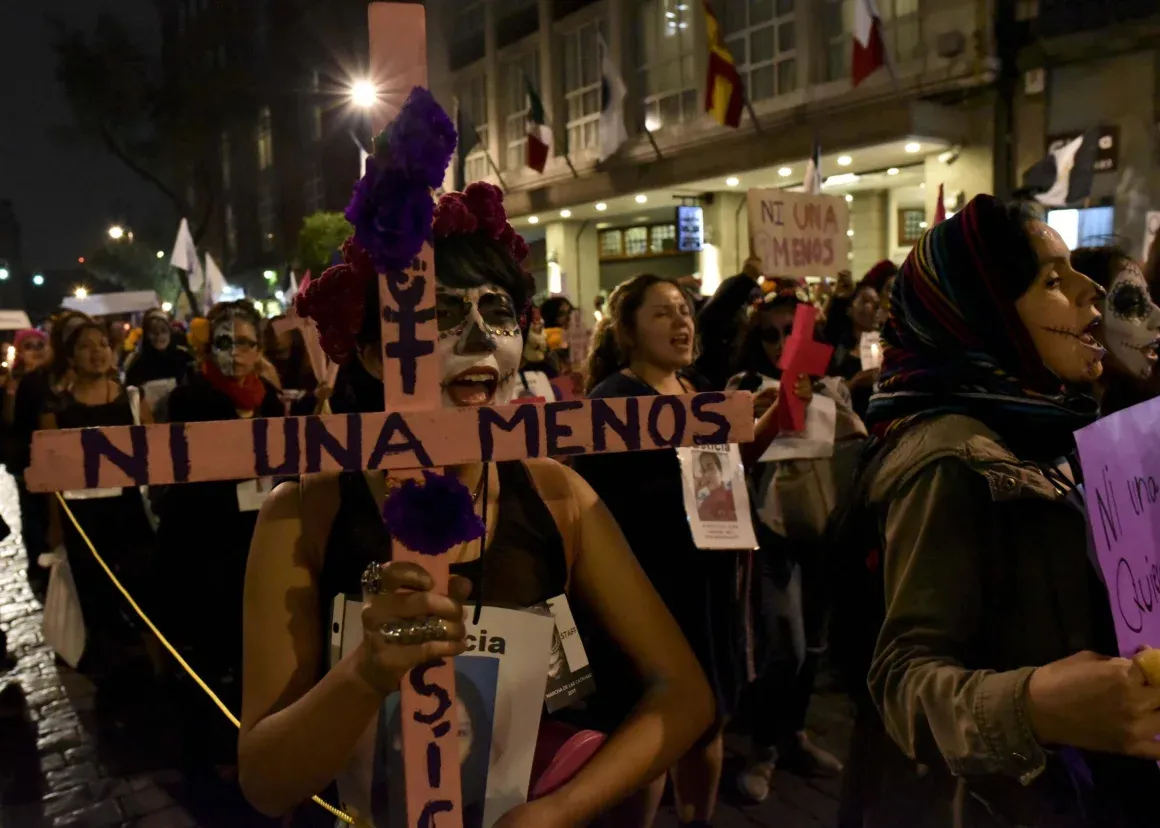
Many Mexican women live a silent life in the service of others, taking care of their homes and children, or maybe the homes and children of their employers. But when violence strikes, they won’t keep quiet. Every year, on International Women’s Day, hundreds of thousands of women flood the streets to remember a las que ya no están (“those who aren’t with us anymore”), victims of femicides and cultural machismo.
There was a special case that shocked the feminist movement: the murder and mutilation of 25-year-old Ingrid Escamilla by her boyfriend in February 2020. This brutal killing struck a chord in artist María Antonieta De la Rosa, who decided to take the matter into her own hands—literally. While studying embroidery for a master’s degree in fine art, she came together with activists Xóchitl Guzmán and Karime Díaz to hold a symbolic funeral for the victim, along with other women family members. Stitch by stitch, they also embroidered the names of other victims. That is how the collective Las Nombramos Bordando (“We Name Them by Embroidering”) was born.
“It was very contradictory to feel so supported but at the same time to share this uncertainty, this pain, this sadness in embroidering the names of victims of femicide. And you also realize that you yourself are in danger. The next name they embroider might be yours,” said Díaz in an interview with The Guardian.
That nightmare became a reality after María Fernanda Rejón, a fellow artist and activist, was found dead on the side of the road. They were under threat, but that didn’t keep them from taking their embroidered quilt to the streets. When the others saw it, covering a wooden coffin, everyone went silent. De la Rosa and the others put out an open call to embroider all the names of the victims killed in Morelos since 2015. Almost 100 women came forward and managed to embroider nearly 200 new patches.
Far from depicting scenes of violence, the designs showcase butterflies, hearts, flowers and an array of beautiful patterns. The women in Bradbury’s story also embroider pleasant scenes, like “lilacs and grass and trees and houses and rivers in the embroidered cloth.” That’s what makes the designs so powerful: it’s a form of artistic expression that has been a part of women’s lives for centuries, a craft that connects their experiences of resistance to this day.
“Art allows us to enter people’s lives in a different way, even if it’s a form of protest, even if it’s very subversive. People don’t perceive it that way because it’s a pretty quilt embroidered by women,” Díaz said to The Guardian.
In Bradbury’s story, the women keep embroidering up till the very end. In the midst of a grim future, they prefer to resist, to die while being themselves, treasuring the lives they’ve always lived. Morir en su ley, like we say in Spanish.
“Somewhere, at the side of her vision, she saw the world brighten and catch fire. She kept her head down, for she knew what it was. She didn’t look up, nor did the others, and in the last instant their fingers were flying; they didn’t glance about to see what was happening to the country, the town, this house, or even this porch. They were only staring down at the design in their flickering hands,” the author writes.
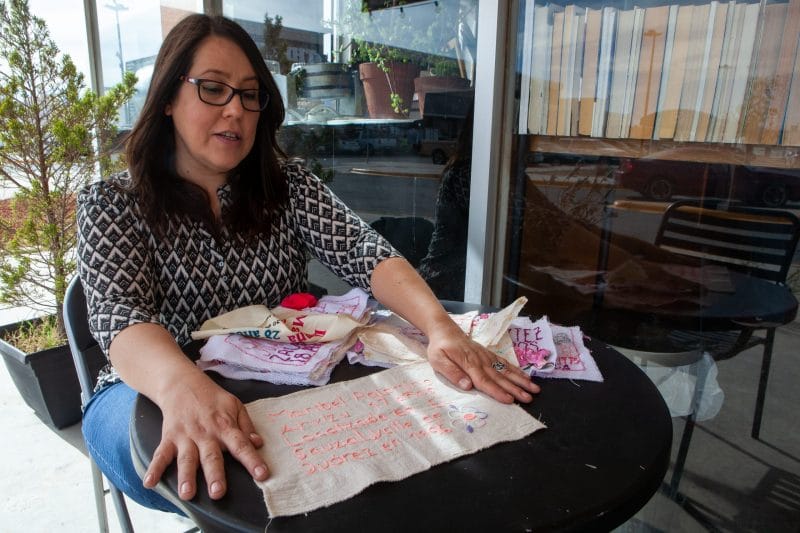
Just like those Mexican women, the Latinas across the Americas embroider to remember, their eyes fixed on their colorful patches. They embroider to rekindle all the beautiful memories of their loved ones, even though nothing will bring them back. But these patterns won’t be consumed by nuclear fire: their stories will live on for those who care to run their fingers through the thread drawings on the fabric.
Resumen en español
El artículo conecta el cuento “Embroidery” de Ray Bradbury con la experiencia de mujeres mexicanas que usan el bordado como forma de memoria y protesta frente a los feminicidios. Tras el asesinato de Ingrid Escamilla en 2020, la artista María Antonieta De la Rosa y otras activistas crearon el colectivo Las Nombramos Bordando, que cose los nombres de víctimas en colchas como ritual de duelo y denuncia. Los bordados, con flores y mariposas, transforman una labor doméstica en un acto político: mantener viva la memoria de las mujeres asesinadas y resistir a la violencia machista.
Bad Bunny headlining Super Bowl. LX. and the conversation around him reveals why Latino representation in American culture still matters.

In the early hours of January 3, 2026, explosions woke residents across Caracas and nearby states, plunging Venezuela into uncertainty. As official media stayed silent, citizens turned to WhatsApp and social platforms. Through firsthand accounts, this story captures the fear that followed.

As Indigenous migrants from Mexico and Central America build lives in the U.S., demand for Mayan language interpretation is rising. When systems assume all Latinos speak Spanish, people fall through the cracks. Here’s what’s changing and why it matters.

While global leaders debate policy, Latina scientists are building solutions now—rooted in community needs and environmental reality. From nopal-based bioplastics to shrimp-shell filtration and smart agriculture sensors, these innovators show what climate progress looks like on the ground.
Get weekly inspiration for living well delivered straight to your inbox.