

Latino Artists Who Performed at the Super Bowl Halftime Show
Bad Bunny headlining Super Bowl. LX. and the conversation around him reveals why Latino representation in American culture still matters.

Universal Studios Hollywood’s Monstruos 3: The Ghosts of Latin America turns iconic legends into Latina horror icons. La Llorona, La Muelona, and La Siguanaba now take center stage redefining fear, power, and representation at Halloween Horror Nights 2025.

Universal Studios Hollywood is turning up the terror this Halloween with Monstruos 3: Los Fantasmas de Latinoamérica at Halloween Horror Nights 2025. The third installment of the Monstruos saga brings Latin American legends to life in a haunted house experience where women like La Llorona, La Muelona, and La Siguanaba no longer play the victim they become the nightmare. As we previously shared, Latin American women dominate horror literature so it is a natural to see these folktale characters come to life.
John Murdy, Executive Producer and Creative Director of Halloween Horror Nights 2025 gets it with Latino influence and that our community are masters of storytelling. He drawed on centuries-old folktales, blending Latino culture with Hollywood horror for a spine-chilling experience that’s both thrilling and culturally rich at the live installment at horror nights.
Latino culture is full of magical realism, allowing its ghosts and spirits to become part of the community’s identity. Within this fantastical world, female figures often use seduction to trap their victims.
Universal Studios Hollywood’s Monstruos series brought several Latino horror characters to life in its first two editions. For the third edition, Executive Director John Murdy told the Discovery Universal Blog:
"I love that we’re bringing Latin American culture closer to people," Murdy said. "These stories have existed in Latin America for centuries, and we’re presenting them to a modern audience. I think it’s amazing and unique."
As Murdy explained during in a Discover Universal podcast, this approach introduces Latino culture while showcasing the potential of Latino horror characters. Most U.S. Halloween events revolve around movie-based or domestic characters. At Universal’s Halloween Horror Nights (HHN), iconic figures like Michael Myers, Jason Voorhees, and classic monsters such as Dracula and Frankenstein dominate the lineup. Placing characters like La Llorona, La Muelona, and La Siguanaba in a similar spotlight elevates their significance, expanding their reach and proving that horror is not exclusive to Anglo culture, it’s a universal language with Latino roots.
Murdy also said in this interview, "This year, we’re going to give guests a different experience. We’ve shown them how our Monstruos house is structured, so now we’re flipping the script. There will be scares in unexpected places, just to keep them on their toes."
Also known as La Colmilona or La Dientona, La Muelona is a ghost originating in Colombia and Venezuela. Some say she was cursed by her husband because of multiple infidelities, while others believe she was a witch who chose her own fate. What everyone agrees on is that La Muelona takes the form of a beautiful woman to seduce unfaithful men. Once she captivates them with her beauty, she lures them into the forest, where she reveals her enormous, terrifying teeth and devours them alive.
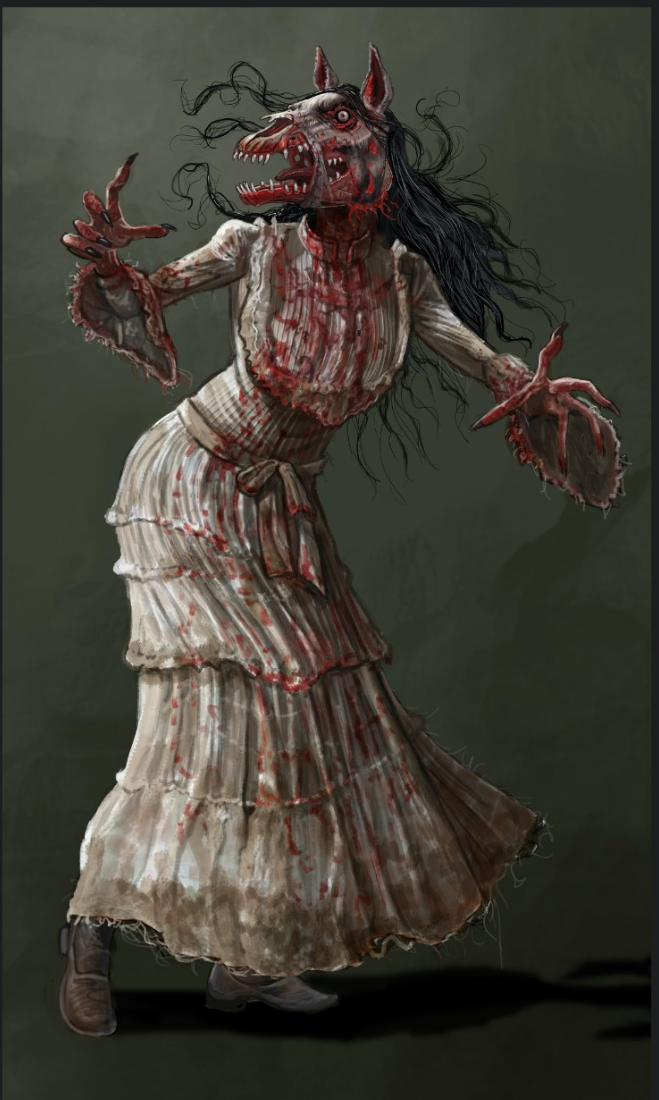
This horror figure from Mexico and Guatemala has roots in the indigenous languages of Mesoamerica. She appears to men with her back turned, hiding her face, nude with an attractive figure and long dark hair cascading down. After luring men, she leads them into a forest and finally reveals her face: a decaying horse’s head. According to legend, most men who see her either die or go insane, condemned to wander the forests forever.
La Llorona is one of the most well-known Latin American legends and has appeared in previous Halloween Horror Nights series. Her story tells of a young bride who has two children. Upon discovering her husband’s infidelity, she falls into deep depression and, in a fit of rage, drowns her children in a river. Tormented by guilt, she spends eternity wandering the earth, crying, “¡Ay, mis hijos!” According to the legend, anyone who encounters her or hears her cries is in danger, as she pursues her victims to end their lives.
"I grew up in the ’80s with original slasher films, where women were only victims," said John Murdy in an interview. "But in recent years, I’ve been insisting on presenting horror icons that are female. The audience at Horror Nights isn’t just male; it’s very diverse."
These three women inspire fear and often punish men, reflecting social critiques of infidelity, patriarchy, loss, and revenge, while also promoting female empowerment. Universal Studios has been at the forefront of this transformative process, supporting a new version of female roles in horror that was previously unseen.
The terror maze begins with a riverine setting in a colonial style, where La Llorona mourns in every corner and surprises visitors with sudden scares. Guests then move into a jungle area inspired by the Andes, where La Muelona pursues her victims with razor-sharp teeth. The experience culminates in a forested environment where La Siguanaba reveals her decaying horse face, chasing visitors until the very end. Offering a fresh perspective on women, the maze presents female figures as unexpected sources of terror.
Female characters play a central role in this production. Director John Murdy, taking a feminist approach, used each legend as a tool to empower women and the Latino community, highlighting the region’s rich cultural diversity and the stories it has to offer—an effort Murdy and his team have championed and showcased on a global entertainment stage.
Monstruos 3 delivers more than just scares it celebrates the richness of Latino culture and the power of female legends. By placing La Llorona, La Muelona, and La Siguanaba at the center of the horror experience, Universal Studios challenges traditional narratives and empowers women, while introducing audiences to stories passed down for generations. This Halloween, terror comes with a distinctly Latino twist, and we are here for it!
Which Latina legend scares you the most?
Bad Bunny headlining Super Bowl. LX. and the conversation around him reveals why Latino representation in American culture still matters.

In the early hours of January 3, 2026, explosions woke residents across Caracas and nearby states, plunging Venezuela into uncertainty. As official media stayed silent, citizens turned to WhatsApp and social platforms. Through firsthand accounts, this story captures the fear that followed.

As Indigenous migrants from Mexico and Central America build lives in the U.S., demand for Mayan language interpretation is rising. When systems assume all Latinos speak Spanish, people fall through the cracks. Here’s what’s changing and why it matters.

While global leaders debate policy, Latina scientists are building solutions now—rooted in community needs and environmental reality. From nopal-based bioplastics to shrimp-shell filtration and smart agriculture sensors, these innovators show what climate progress looks like on the ground.
Get weekly inspiration for living well delivered straight to your inbox.