

Latino Artists Who Performed at the Super Bowl Halftime Show
Bad Bunny headlining Super Bowl. LX. and the conversation around him reveals why Latino representation in American culture still matters.

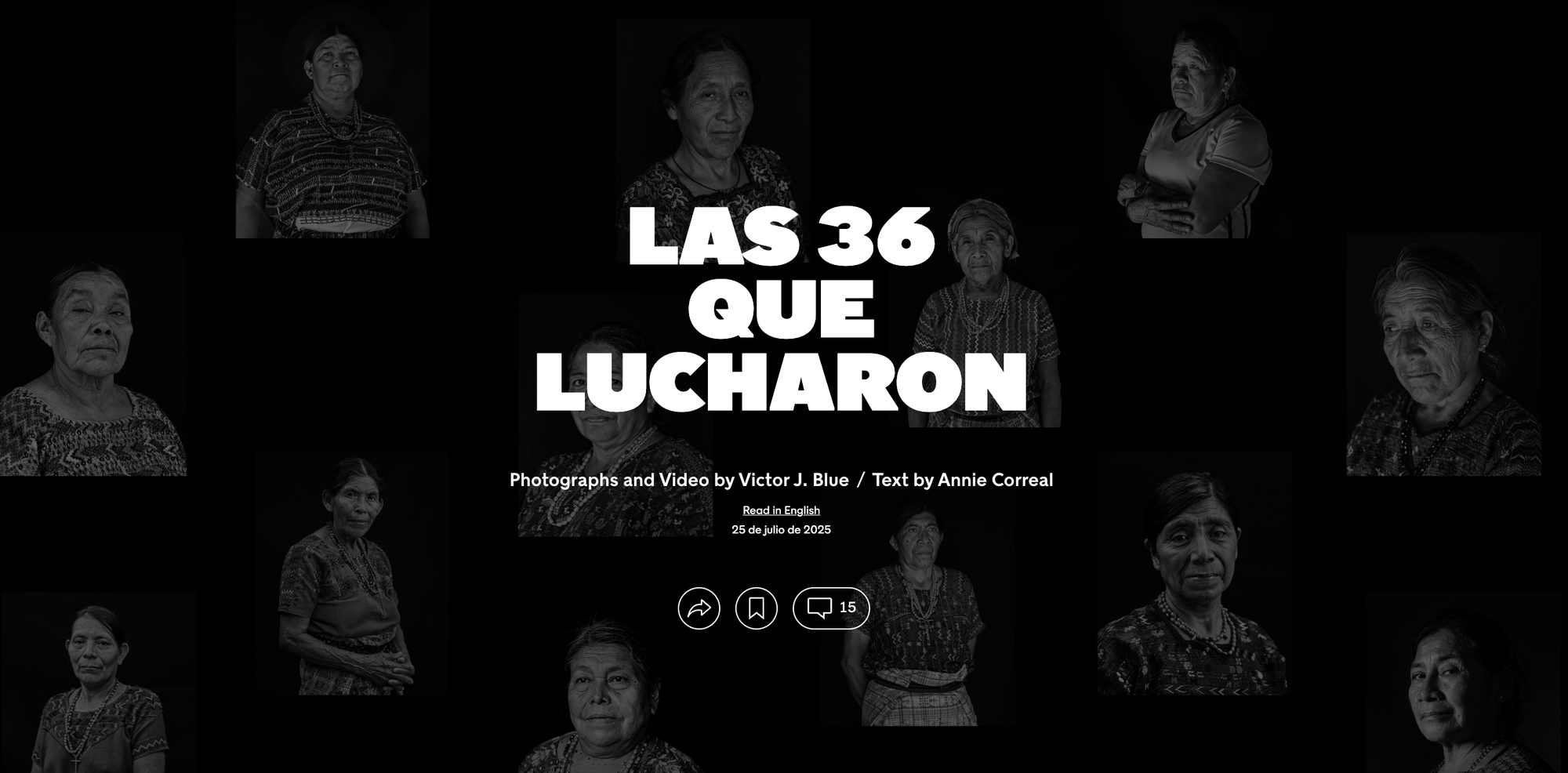
After decades of silence, Maya Achí women won historic convictions in 2022 and 2025 even as some never lived to hear the verdict. Their fight shows justice can be delayed, but it doesn’t expire.

After four decades of silence, a group of Guatemalan women from the Maya Achí community achieved justice following years of systematic sexual violence. For the indigenous Maya community, it represents a historic victory, the result of the perseverance of courageous women who refused to give up despite numerous obstacles.
A Guatemalan court sentenced five former members of the Civil Self-Defense Patrols (PAC) for sexual violence and sexual slavery, crimes committed during the Guatemalan civil war (1960–1996). On Jan. 24, 2022, brothers Benvenuto and Bernardo Ruiz Aquino, along with Francisco, Damián, and Gabriel Cuxum Alvarado, were found guilty of crimes against Pedrina Ixpatá and four other women who came forward. Four were sentenced to 30 years in prison, while Gabriel Cuxum received 40 years for crimes against humanity, identity alteration, and document forgery.
The crimes occurred between 1981 and 1985, but the first complaints were not filed until 2011. This three-decade gap made gathering evidence, identifying perpetrators, and navigating the complex legal process extremely difficult.
The crimes took place in remote villages around Rabinal during the dictatorship of Efraín Ríos Montt, who was supported by the United States. The Guatemalan Army and PAC systematically violated indigenous communities to terrorize and intimidate the population, aiming to eliminate support for the guerrillas.
Paramilitary forces recruited women and girls from nearby communities, targeting anyone who collaborated with the “subversives.” Victims were raped and held for weeks, forced to perform tasks such as cooking and cleaning for the military.
These acts were carried out as a weapon of war to humiliate, dominate, intimidate, and destroy the identity of the Achí people, leaving traumas that affected the entire community. The violence led some victims to stop passing their language and cultural values to the next generation, constituting a form of cultural genocide.
The path to conviction was plagued with challenges. Sexual abuse is a difficult crime to report and prove, especially when victims face trauma, social stigma, shame, and fear of retaliation.
The context of armed conflict further complicated the situation. During the civil war, state institutions were either vulnerable or directly involved in cases of violence, leaving crimes unpunished for decades.
Indigenous communities were historically marginalized in Guatemalan society, while the perpetrators belonged to a state-backed paramilitary force. This power imbalance made the path to justice seem nearly impossible.
The violence left the countryside plagued with mass graves, and women faced daily sexual assault.
Pedrina Ixpatá Rodríguez was 12 years old when the Ruiz Aquino brothers arrived at her house in the village of Pacotzij de Rabinal. Hours later, they returned wearing military uniforms and painted faces. They beat and dragged out her father, accusing him of being a guerrilla, and took her parents away forever. That night, they raped Pedrina for two hours, in front of her small siblings.
"We were left with nothing," she testified before in court.At 12 years old she had to care for her four younger siblings. She was later kidnapped and taken to the barracks, where a soldier protected her by hiding her. This soldier became a protected witness and confirmed her testimony, providing key evidence.
Candelaria Xolop Morales was 19 years old when she was abused.
"What happened was against my will. They raped me and that left me with fear," she stated in her testimony.
Candelaria had a daughter by one of her attackers. When her daughter learned the context of her birth, she responded:
"I'm going to take care of you when I'm older. I've come to save you." stated in New York Times coverage.
Paulina Ixpatá Alvarado, Pedrina's cousin, was also 19 years old when she was intercepted by PAC members while walking with her mother toward Rabinal.
"Some people approached my mom and told her 'we want to talk with your daughter,'" she tells BBC Mundo.
She was held for 25 days at a military outpost.
"The 25 days at the detachment, they raped me every night. And when I left, I left sick and always, always persecuted, they told me that if they saw me in the community, they would kill me right away."
After leaving she fled to the capital due to threats. Her recovery was a slow and torturous process.
"For me it was very hard. It was very hard because they didn't just commit sexual rape. They also killed several children. They stole our animals. They burned our house. And when I stayed, I stayed with only one change of clothes," Paulina said.
For many years, her community didn't want to talk about the topic, convinced that nothing would be done.
"That's why we have to persist, because if we leave it like that, it will continue the same —buried."
All these statements and trials undertaken by the Achí women, together with the Sepur Zarco grandmothers' case, were able to prove that sexual violence was a strategically planned action. They were ordered with specific instructions to intimidate, sow rejection and shame, applied as part of counterinsurgency policy during the internal armed conflict, also being a way to facilitate the extermination of indigenous communities.
For many years, the crimes remained in complete impunity, until the affected women decided to break their silence to bring their aggressors to justice. With each step of courage, telling their testimonies, they managed to demonstrate the systematic nature of the crimes and achieve a historic conviction.
The level of violence each of them suffered not only covered the physical and emotional side but also tore apart their culture and deeply wounded their identity as Maya. That's why this victory means so much: it symbolizes the renewal of a wounded culture and the exaltation of all those values that were humiliated.
Jesús Tecú Osorio, who as a child survived a massacre in the 1980s, led one of the first actions in 1993 to achieve justice for his murdered family. He created a legal assistance organization dedicated to collecting evidence to bring other perpetrators to trial. During the process of interviewing Achí women, Jesús and his team heard that all had been raped by patrollers and soldiers.
In 2011, women began filing complaints thanks to guidance from the legal organization and advice from Maya lawyers. By 2014, Jesús's team managed to gather the necessary evidence to bring this case to trial. The case was based on testimony from 36 women, though only some were official plaintiffs, including Pedrina Ixpatá, Paulina Ixpatá, Candelaria Xolop, Lucía Jerónimo, Margarita Alvarado and Estefana Alvarado.
In 2018, several former patrollers involved in the case were detained. However, a judge freed the criminals, ruling that the women's testimonies weren't sufficient evidence. But this didn't make the wounded community give up.
On Jan. 24, 2022, a Guatemalan court found the Ruiz Aquino brothers and three other men, Francisco, Damián and Gabriel Cuxum Alvarado— guilty of sexual violence crimes against Pedrina and four other women plaintiffs, sentencing them to the maximum penalty of 30 years in prison. Gabriel Cuxum received an additional 10 years for identity alteration and document falsification. By then, many of the victims were approximately 80 years old and others had died.
The evidence collection also managed to prove the connection between the PAC and Guatemala's Army, holding the Guatemalan state responsible. For this reason, the state was ordered to pay reparations, scholarships for the education of these women's children and grandchildren, and teaching about these crimes so they are never forgotten.
In April 2025, a second trial for sexual violence was held against three former civilian patrollers: Pedro Sánchez, Simeón Enrique Gómez and Félix Tum, accused of crimes against the duties of humanity. Nearly 100 pieces of evidence, including documents and testimonies, were presented against the former soldiers.
Haydeé Valey, lawyer for one of the victims, explained to The Associated Press:
"Seven of the 36 women who filed complaints have already died."
The women who died couldn't see those responsible convicted.
"The perpetrators of sexual violence are being tried as material authors," the lawyer explained.
Valey detailed that this case was divided into two phases because a judge, in the first phase of the judicial process, ruled in favor of the accused, but thanks to various legal resources they achieved the trial.
The conviction represents more than delayed justice: it's recognition that indigenous women's voices matter, that their pain has value and that no crime, regardless of when it occurred, should go unpunished. For Guatemala, it marks the beginning of a healing process that should have started 40 years ago.
Bad Bunny headlining Super Bowl. LX. and the conversation around him reveals why Latino representation in American culture still matters.

In the early hours of January 3, 2026, explosions woke residents across Caracas and nearby states, plunging Venezuela into uncertainty. As official media stayed silent, citizens turned to WhatsApp and social platforms. Through firsthand accounts, this story captures the fear that followed.

As Indigenous migrants from Mexico and Central America build lives in the U.S., demand for Mayan language interpretation is rising. When systems assume all Latinos speak Spanish, people fall through the cracks. Here’s what’s changing and why it matters.

While global leaders debate policy, Latina scientists are building solutions now—rooted in community needs and environmental reality. From nopal-based bioplastics to shrimp-shell filtration and smart agriculture sensors, these innovators show what climate progress looks like on the ground.
Get weekly inspiration for living well delivered straight to your inbox.