


Latino Artists Who Performed at the Super Bowl Halftime Show
Bad Bunny headlining Super Bowl. LX. and the conversation around him reveals why Latino representation in American culture still matters.


Hollywood has always had trouble properly representing the Latin community in ways that showed a positive light of the culture that feels genuine. For example, there was controversy over Ronni Hawk being cast as a Latina in Netflix’s “On My Block,” despite the fact she isn’t Latina. Another example would be Robert Wise and Jerome Robbins’ “West Side Story,” where there was only one Latina playing a Latin character; Rita Moreno playing Anita. The rest of the Latin characters in the film were white actors in dark makeup. The biggest reason as to why this is happening is because there is a severe lack of Latinos behind the camera and on the creative team.
A study done by the University of Southern California Annenberg (USCA) found that seven percent of all U.S. directors were Latino. The study also found that three percent of U.S. producers were Latino, and three percent of U.S. casting directors were also Latino. The study concluded there is a direct link between the lack of Latinos on the creative team and the lack of Latinos acting on screen.
Many Latinos and Hispanics grow up in America without seeing themselves represented in positive or accurate ways. This can be especially damaging because negative stereotypes leave marks on viewers that can be hard to erase. I can say this is true for myself, because I didn’t grow up with a wide range of characters who looked like me, and it was incredibly damaging to my self-esteem.
I never felt like I truly belonged in any space, and it made me feel inferior to my white counterparts. My self-esteem was also affected by the lack of Latinos in positions of power- almost as if the creators of these shows didn’t view Latinos as people who were worthy of commanding a room or expressing their unique abilities. This was made clear in the hit medical drama “Grey’s Anatomy.”
Although diversity and representation have improved later on in the show, it lacked characters of color in the beginning. I noticed this immediately when I first started watching the show. There were only a handful of leads who weren’t white, and the first Latino on the show, Callie Torres, played by Sara Ramirez, didn’t appear until season two and didn’t become a recurring character until season three. Because this is the biggest medical drama on TV, seeing this made me feel insecure about my chances of achieving a career in the medical field. If Callie struggled to do it, how could I? And seeing as a vast majority of people see this problem too, it doesn’t make the public opinion of Latinos improve.
According to a 2012 study conducted by the National Hispanic Media Coalition, 95 percent of people surveyed said they saw Latinos as criminals, gardeners, maids, dropouts, etc. either “very often” or “sometimes.” This display reminds viewers that Latinos are still seen as less intelligent people than their white counterparts.
When Hollywood maintains these negative stereotypes, the consequences are long-lasting. When Latinos see versions of themselves who are criminals, maids, and gardeners, it forces them to question their value in the workforce. This also leads to barriers that are harder to break down because of the lack of representation.
A great example of these stereotypes is Sofia Vergara’s character in the sitcom “Modern Family.” Vergara plays Gloria, a loud, feisty, and sassy wife of Jay, who is played by Ed O’Neill. Gloria’s character is many stereotypes wrapped into one —and when the show first aired in 2009, Vergara was one of the first Latinas to be a part of the main cast on a major television network. This means Vergara’s character was many American’s first experience seeing a recurring Latino character. Although Gloria improved throughout the show, she was oftentimes the center of jokes, whether it be the way she talks or her Colombian heritage.
These stereotypical roles are harmful to the Latino community because it creates a false and outdated characterization. Proper representation should include Latinos in more prominent careers, such as; doctors, lawyers, astronauts, and other roles that are typically seen as heroic.
Take for example Jennifer Lopez in “Maid in Manhattan,” where Lopez plays a maid and falls in love with a rich man who swoops in and saves her from a life of poverty as a single mother living in New York City. Although Lopez’s character, Marisa, is seen as hardworking, she is still a maid —which can be seen as dehumanizing and insignificant.
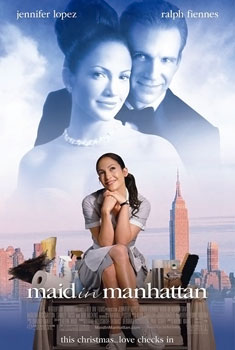
These racist stereotypes have already been deeply embedded into American society and do nothing to inspire young Latinos into entering a career dominated by white people. By portraying these stereotypes, Latinos become dehumanized characters. Challenging these false depictions could be beneficial to young Latinos because it could give them the confidence to obtain careers that were previously dominated by white employees. It is imperative that we as Latinos use our voices to call out the way we have been treated by the film industry and encourage change behind the scenes.
Although it’s great that there are organizations to combat the decades of misrepresentation of Latinos in Hollywood, it’s disappointing that any organizations had to be created in the first place. Latinos should have been represented the right way from the beginning, and the fact that those who came before had to fight for a seat at the table is reminiscent of the fight for respect throughout American history. We shouldn’t have to ask to be respected– it should be a given.
Alyssa Guevara was born in Teaneck, New Jersey to two immigrant parents. Alyssa is 17-years-old and currently lives in Roxbury NJ, along with her two siblings. She has had a passion for writing since she was young, and is currently working on a novel featuring a Latina witch. In her spare time, Alyssa loves to play the ukulele, bake, and perform with her high school Theater Group. Her dream is to publish several novels with the main focus of stories featuring underrepresented people. Alyssa writes for Latinitas Magazine.
Bad Bunny headlining Super Bowl. LX. and the conversation around him reveals why Latino representation in American culture still matters.

In the early hours of January 3, 2026, explosions woke residents across Caracas and nearby states, plunging Venezuela into uncertainty. As official media stayed silent, citizens turned to WhatsApp and social platforms. Through firsthand accounts, this story captures the fear that followed.

As Indigenous migrants from Mexico and Central America build lives in the U.S., demand for Mayan language interpretation is rising. When systems assume all Latinos speak Spanish, people fall through the cracks. Here’s what’s changing and why it matters.

While global leaders debate policy, Latina scientists are building solutions now—rooted in community needs and environmental reality. From nopal-based bioplastics to shrimp-shell filtration and smart agriculture sensors, these innovators show what climate progress looks like on the ground.
Get weekly inspiration for living well delivered straight to your inbox.