

Latino Artists Who Performed at the Super Bowl Halftime Show
Bad Bunny headlining Super Bowl. LX. and the conversation around him reveals why Latino representation in American culture still matters.


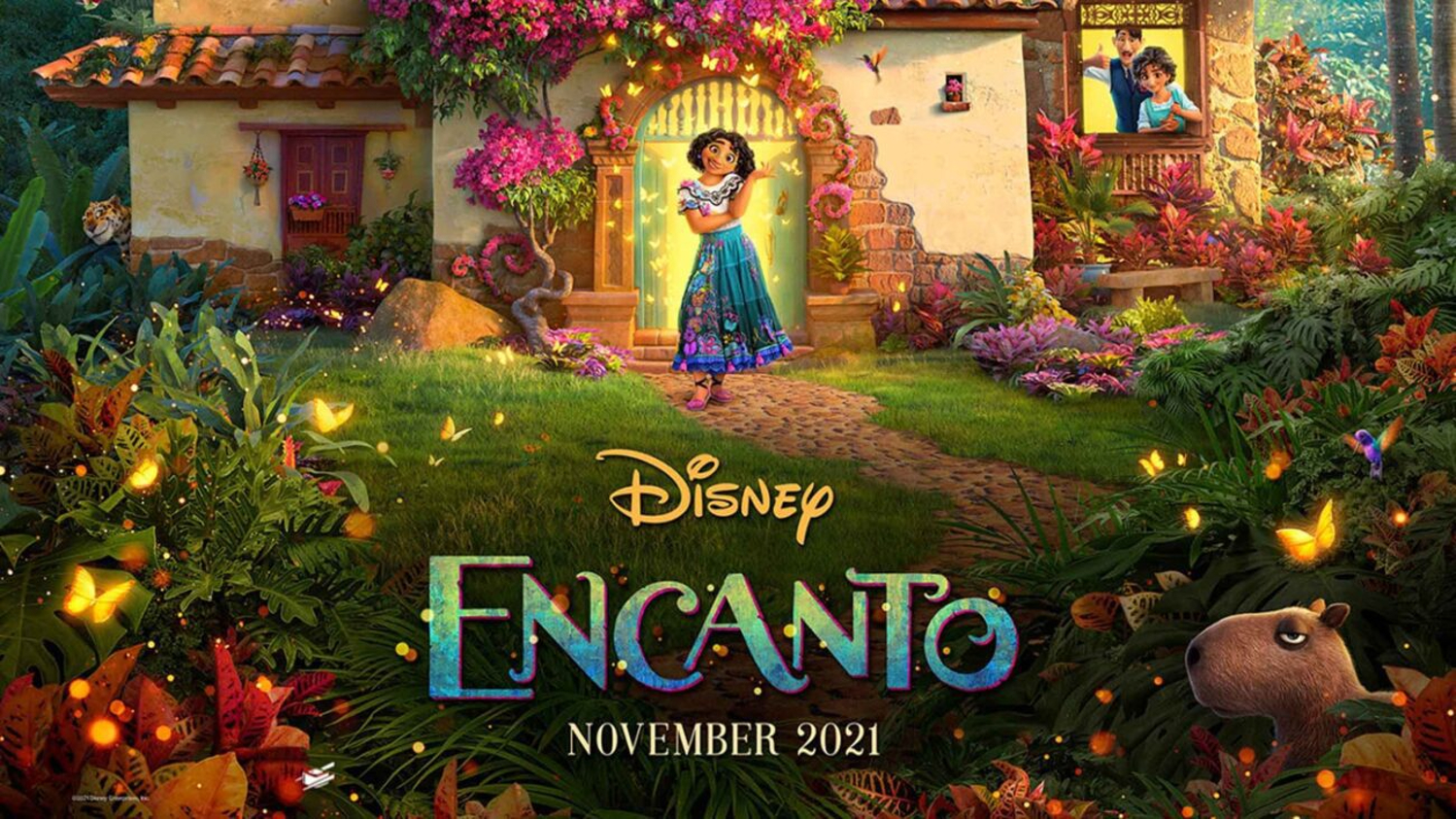
Photo: Film Daily
Growing up as a Colombian-American in San Francisco, I didn’t see too many other people from my South American nation. Sure, there was a community, but it was tiny in comparison to the larger Mexican, Nicaraguan, Salvadorian and other Latin American communities that no doubt helped raise me in the Bay. I felt unique but I also felt a bit isolated. I reached for things that would help me feel connected to my own culture, things that would reinforce my deep pride in being Colombian–music, books, television shows, and other forms of pop culture. It reminded me that there are millions of other Colombian-Americans like me, and that we have so much in common to celebrate.
Imagine how I would have felt if Encanto existed when I was a kid!
Encanto, released on Thanksgiving day this year, Disney’s latest animated film, centers around the Madrigal family in Colombia, particularly Mirabel. The young girl wasn’t blessed with the supernatural gifts everyone else in it was; this uniqueness makes Mirabel feel isolated, and different, a feeling that many young Latinas, myself included, have been able to relate to. But, even though Mirabel appears to be imperfect (who isn’t?!), and may not seem as special as her family members, it is her who ends up saving the day when it is needed.
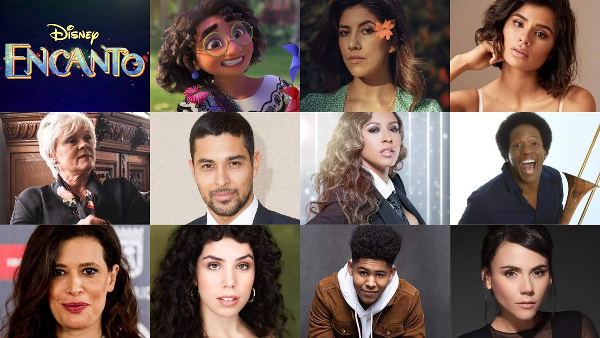
Photo: Aussie Disney Girl/YouTube
In addition to a cool premise that ties into Colombia’s use of magical realism, and a glimpse into our culture, another great thing is that there are actual Latin Americans and Colombians tied to Encanto. Stephanie Beatriz, who is Argentinian-born with a Colombian father and Bolivian mother, voices Mirabel. Other Colombians and Colombian-Americans who are part of the production include John Leguizamo, Diane Guerrero, Maria Cecilia Botero, Mauro Castillo, Angie Cepeda, Adassa, Carolina Gaitan, and Maluma. Carlos Vives serves as one of the film’s producers. When my family and I, a Colombian-American found out Encanto was in production, we couldn’t believe that Disney was telling one of our Colombian stories; to then learn that people we have seen rep Colombia for many years are a part of that storytelling is icing on the cake (and real representation in Hollywood).
Disney’s Encanto isn’t just a win for Colombians and Colombian-Americans, however. It is just one wave of a growing tide in which Disney female protagonists are diverse, strong, and don’t need anyone–much less a man–to save the day but themselves. They also aren’t perfect, or pretend to be, and in spite of their flaws, they become fully realized, successful people. What sets them back ends up setting them free. These are stories that both adult women, and little girls, need to read, hear, and see on a regular basis.
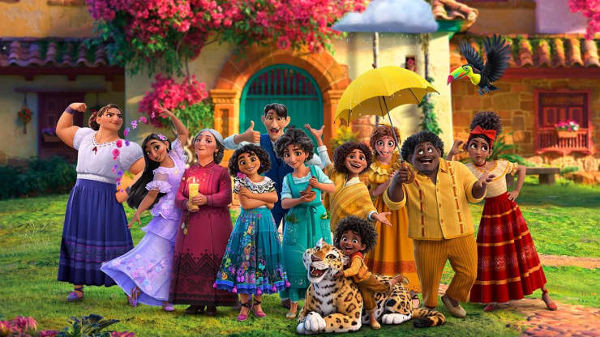
Photo: Disney/CNBC
Disney’s 60th animated film means a lot to me, and I must not be the only one as a Colombian-American who feels that way, given it has earned over $116 million worldwide since its release. It has given me the ability to see a girl with big hair and glasses like I had, who is also Colombian, who has strong ties to her family, who doesn’t have it all figured out, up there on the screen. To have the world see what I see in Colombia, the beautiful images, the culture, the amazing people–and not the drugs and the stereotypes. To hear vallenato and understand why we love accordions. To be seen. Disney, a part of the world’s childhood, took a piece of Colombia and shared it with the planet, and for that I am grateful. I hope that they share the narratives of each and every Latin American nation, so that other Latinxs can feel represented, understood, heard, and appreciated. Wepa!
Bad Bunny headlining Super Bowl. LX. and the conversation around him reveals why Latino representation in American culture still matters.

In the early hours of January 3, 2026, explosions woke residents across Caracas and nearby states, plunging Venezuela into uncertainty. As official media stayed silent, citizens turned to WhatsApp and social platforms. Through firsthand accounts, this story captures the fear that followed.

As Indigenous migrants from Mexico and Central America build lives in the U.S., demand for Mayan language interpretation is rising. When systems assume all Latinos speak Spanish, people fall through the cracks. Here’s what’s changing and why it matters.

While global leaders debate policy, Latina scientists are building solutions now—rooted in community needs and environmental reality. From nopal-based bioplastics to shrimp-shell filtration and smart agriculture sensors, these innovators show what climate progress looks like on the ground.
Get weekly inspiration for living well delivered straight to your inbox.