Black and Latina Mothers Receiving Extra Income To Support Their Families

Black and Latina Mothers Receiving Extra Income To Support Their Families
Black and Latina mothers who lived in hardship before were hit the hardest with the pandemic. For many, issues just compounded, unable to make ends meet and having to simultaneously care for their families at home due to Covid-19. Both the pandemic’s economic and health effects have been noted for Black, Latina and other women of color in the United States.

Here are a few factors that contributed to further hardship for Black women and Latinas

Black women and Latinas had the highest job loss rates in all the nation. With Latinas at the top of highest job loss and at the bottom of pay pre-pandemic making them more susceptible to job loss and being rehired. 

All mothers navigated remote learning for their children, however the pandemic opened up the inequalities of access to technology and robust internet connectivity especially in public housing and low-income neighborhoods.

Most low-income families live in small apartments with multi-generational family members, have language barriers, domestic violence at home and of course, the disportionate rate of Covid-19 deaths in our Black and Brown communities.


Black and Latina mothers and other female members of the family faced mental health decline and emotional labor in households that rely on women to be the organizers of events in the family like deaths. 

What is being done to support Black and Latina mothers?

Families were able to receive Federal and State support during the pandemic temporarily through monthly stimulus checks and Child Tax credits. For many, the aid has stopped, The public support however did not alleviate poverty. In fact, poverty rates are down. Americans are still out of work and the ongoing public school debate with Covid and child vaccinations has kept many families from returning their children to school in confidence. 

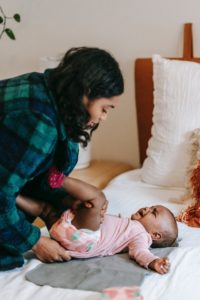
Black and Latina mothers

Photo by William Fortunato from Pexels

The call to support more Black and Latina mothers has been heard and 35 private and public pilot programs across the nation in 17 states including the cities of Los Angeles and Chicago have leveled up to aid mothers in need. 

For instance, the Bridge Project in New York City launched a $16 million dollar ‘guaranteed income’ pilot program. The program came with a no strings attached policy for mothers of color in need. Launched last year, the program will measure the effect of regular, unconditional stipends on low-income families.
 
The additional income of $1000 or $500 a month is allowing New York City mothers of color under the Bridge Project to buy essential baby and child items. With inflation and continuing rising food costs, food stamps run out sooner, the additional income supplements. Above all, the Bridge pilot program is allowing mothers to spend the money where they feel most needed without supervision or restriction. 

Read More

Latino Artists Who Performed at the Super Bowl Halftime Show

Latino Artists Who Performed at the Super Bowl Halftime Show

Bad Bunny headlining Super Bowl. LX. and the conversation around him reveals why Latino representation in American culture still matters.

'We Didn’t Know What Was Happening’: Venezuelans Describe the Night Maduro Was Captured

'We Didn’t Know What Was Happening’: Venezuelans Describe the Night Maduro Was Captured

In the early hours of January 3, 2026, explosions woke residents across Caracas and nearby states, plunging Venezuela into uncertainty. As official media stayed silent, citizens turned to WhatsApp and social platforms. Through firsthand accounts, this story captures the fear that followed.

Mayan Languages Are Expanding Across the U.S.—And Courts, Schools, and Clinics Are Catching Up

Mayan Languages Are Expanding Across the U.S.—And Courts, Schools, and Clinics Are Catching Up

As Indigenous migrants from Mexico and Central America build lives in the U.S., demand for Mayan language interpretation is rising. When systems assume all Latinos speak Spanish, people fall through the cracks. Here’s what’s changing and why it matters.

Latina Inventors Are Building the Future of Sustainability—From Nopal Bioplastics to Water Filters

Latina Inventors Are Building the Future of Sustainability—From Nopal Bioplastics to Water Filters

While global leaders debate policy, Latina scientists are building solutions now—rooted in community needs and environmental reality. From nopal-based bioplastics to shrimp-shell filtration and smart agriculture sensors, these innovators show what climate progress looks like on the ground.

Join our community

Get weekly inspiration for living well delivered straight to your inbox.