

Latino Artists Who Performed at the Super Bowl Halftime Show
Bad Bunny headlining Super Bowl. LX. and the conversation around him reveals why Latino representation in American culture still matters.


History survives because we talk about it, learn from it, and pass it on. Latinx history is often omitted from what we learn in history classes in the United States. While that is something that has to be remedied, we are also in danger of losing physical pieces of our past. Historic landmarks, monuments, and Latinx heritage sites, such as Chepa’s Park, “California’s oldest Mexican-American neighborhood,” and Fefa’s Market, the “South Providence’s first Dominican bodega” are in danger of eventually deteriorating into only memories if federal protection isn’t granted.
Luckily, Latino Heritage Scholars is pushing to preserve Chepa’s Park, Fefa’s Market, and five other Latinx heritage sites. Manual Galaviz, co-author of Latino Heritage Scholars’ Place, Story, and Culture: An Inclusive Approach to Preserving Latino Heritage Sites, stated:
“We must ensure that these places are federally protected through the National Registry of Historic Sites, Traditional Cultural Properties, and National Parks and Monuments, through the Antiquities Act, to ensure future generations can visit these places and learn about them.”
While we wait for seven important Latinx places to be protected and preserved, we should know about those spots that have already been deemed important and are under the protection of the United States government. The following four places are listed as American Latino Heritage sites via the National Park Service.
Ver esta publicación en Instagram
Cesar Chavez is a legend; a Chicano who stood up for farmworkers rights in California. Today, you can visit the Cesar Chavez National Monument, located at the activist’s Nuestra Señora Reina de la Paz estate in Keene, California. The property consists of “memorial gardens (containing the graves of Cesar Chavez and Helen Chavez), a visitor center, licensing office and sprawling conference and education center,” and includes The Forty Acres, where the former headquarters of the United Farm Workers of America was located.
Caleb Pomeroy/Wikipedia
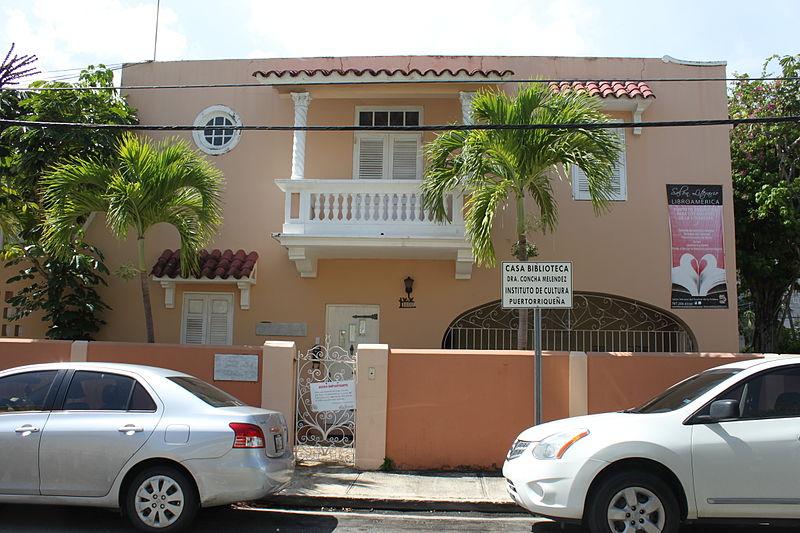
In Puerto Rico, you’ll find several heritage sites, including the home of Dr. Concha Melendez Ramirez, located at 1400 Vilá Mayo, in San Juan. Melendez Ramirez was a prominent literary critic and part of the Generación del Treinta (Generation of 1930). She lived at this house for 43 years, from 1943 to 1983 (her death).
Ver esta publicación en Instagram
In Tampa, Florida, an entire Latinx district of 956 historic buildings is protected–the Ybor City Historic District. The former “Cigar Capital of the World,” Ybor City was founded in 1885 by Spanish businessman Vicente Martinez-Ybor, who wanted a new location for his cigar factory, which had been originally moved from Cuba. The community was made up of Spanish, Cuban, and Italian workers, who also lived in the houses in Ybor City. Today, you can see old cigar factory buildings and beautiful old architecture, visit The RITZ Ybor (formerly the Rivoli Theatre), eat at the historic Columbia restaurant (Florida’s oldest restaurant and the world’s largest Spanish restaurant), and more.
Ver esta publicación en Instagram
From 1821 to 1846 (the year the Mexican-American War began), the Santa Fe Trail served as a commercial highway, between New Mexico and Missouri (about 900 miles long), for both American and Mexican traders. The trail continued to be a route for hauling freight through New Mexico, Colorado, Kansas, Oklahoma, and Missouri until 1880, when trains replaced wagons and stagecoaches. The Santa Fe Trail is a historic part of Mexican history in the U.S. (celebrating its 200th anniversary this year), as well as being part of the country’s expansion westward.
Bad Bunny headlining Super Bowl. LX. and the conversation around him reveals why Latino representation in American culture still matters.

In the early hours of January 3, 2026, explosions woke residents across Caracas and nearby states, plunging Venezuela into uncertainty. As official media stayed silent, citizens turned to WhatsApp and social platforms. Through firsthand accounts, this story captures the fear that followed.

As Indigenous migrants from Mexico and Central America build lives in the U.S., demand for Mayan language interpretation is rising. When systems assume all Latinos speak Spanish, people fall through the cracks. Here’s what’s changing and why it matters.

While global leaders debate policy, Latina scientists are building solutions now—rooted in community needs and environmental reality. From nopal-based bioplastics to shrimp-shell filtration and smart agriculture sensors, these innovators show what climate progress looks like on the ground.
Get weekly inspiration for living well delivered straight to your inbox.